Last updated October 31, 2026
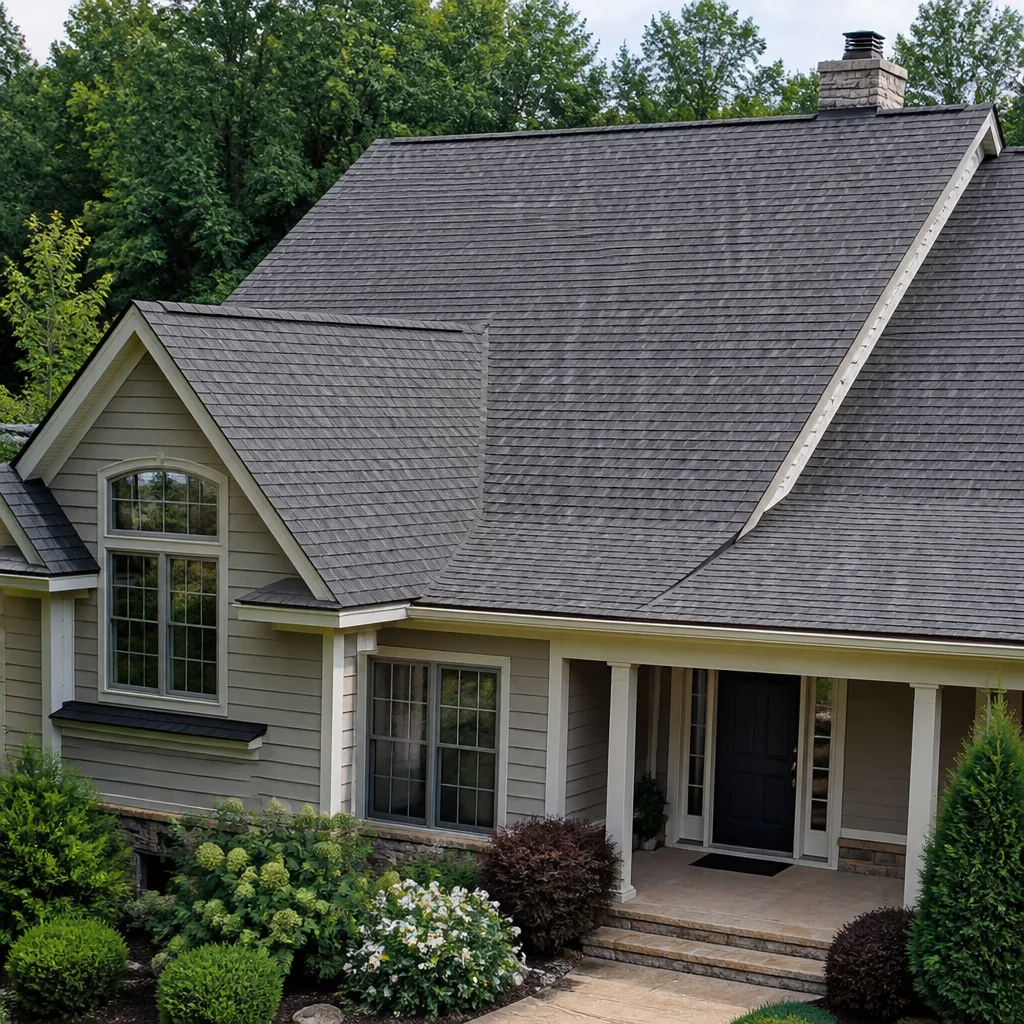 Architectural shingles
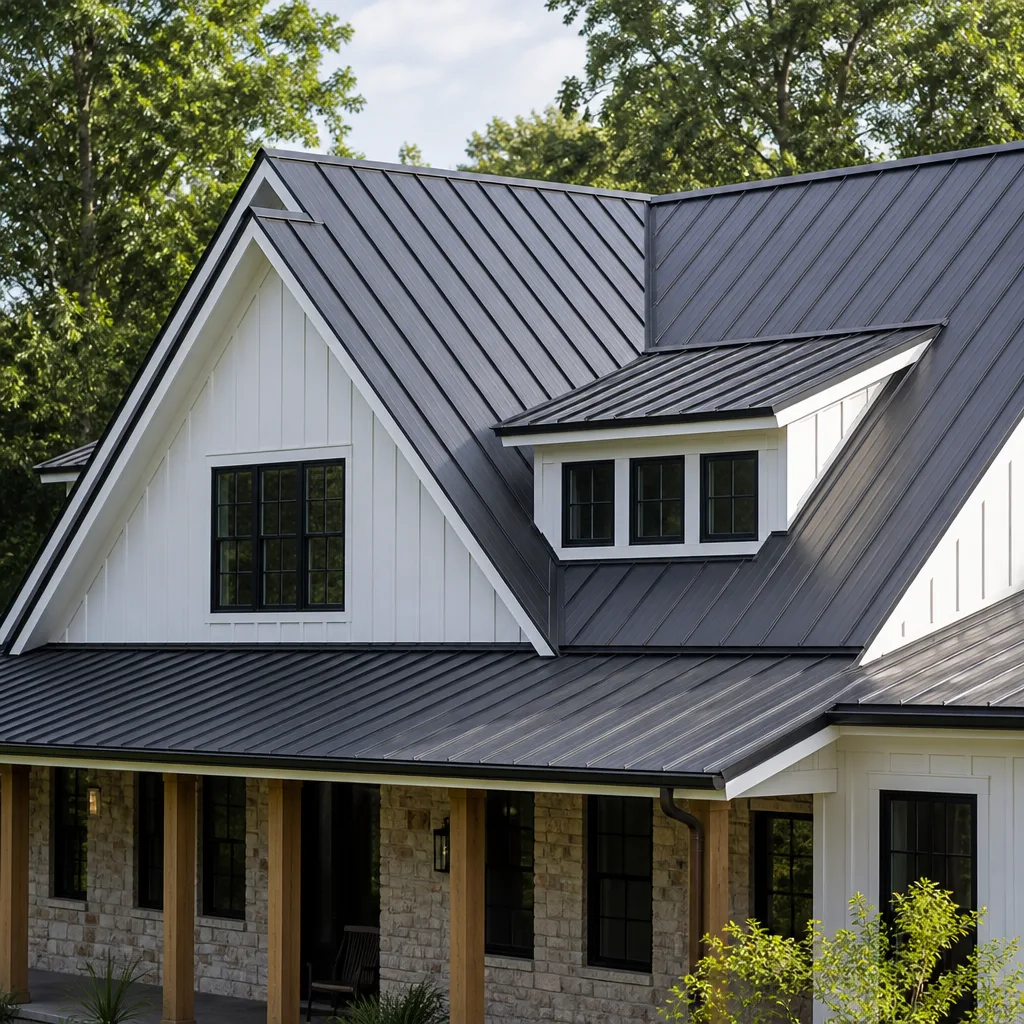 Metal roofing
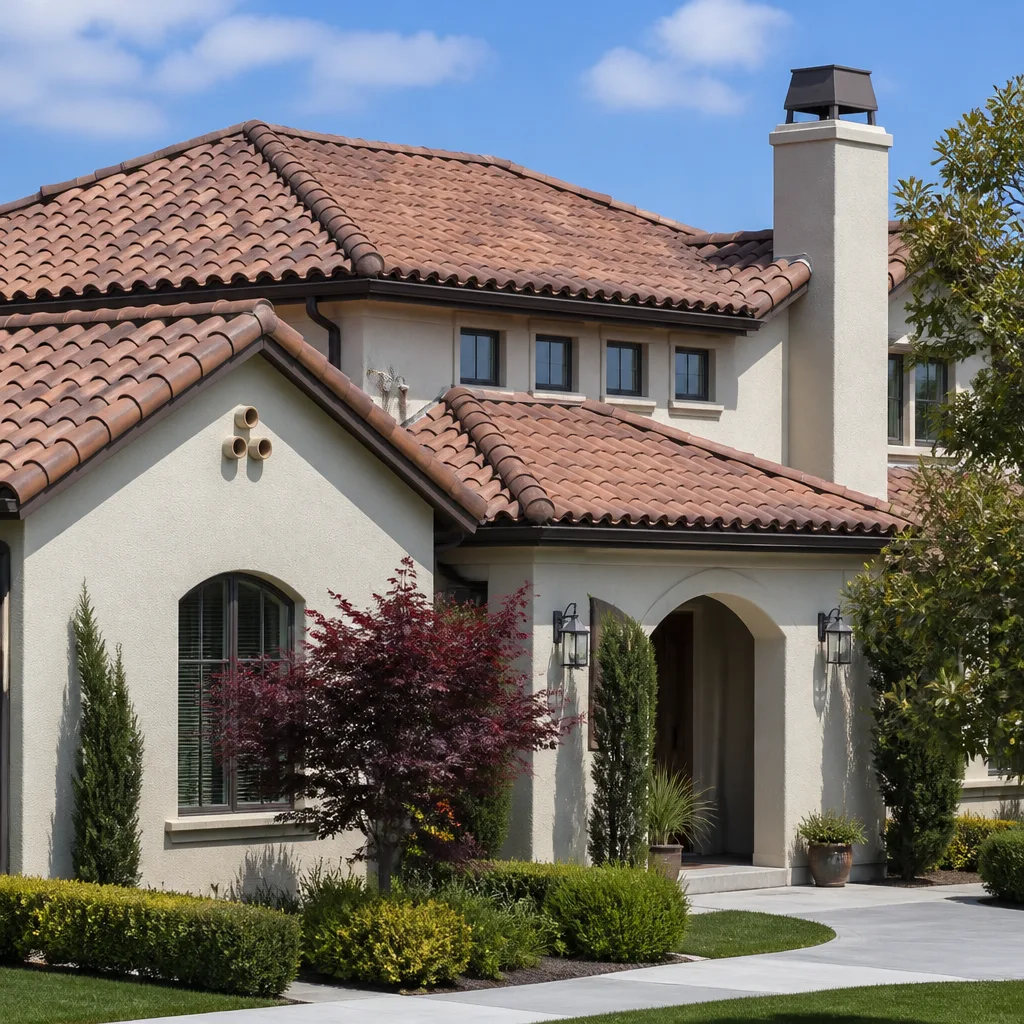 Tile roofing
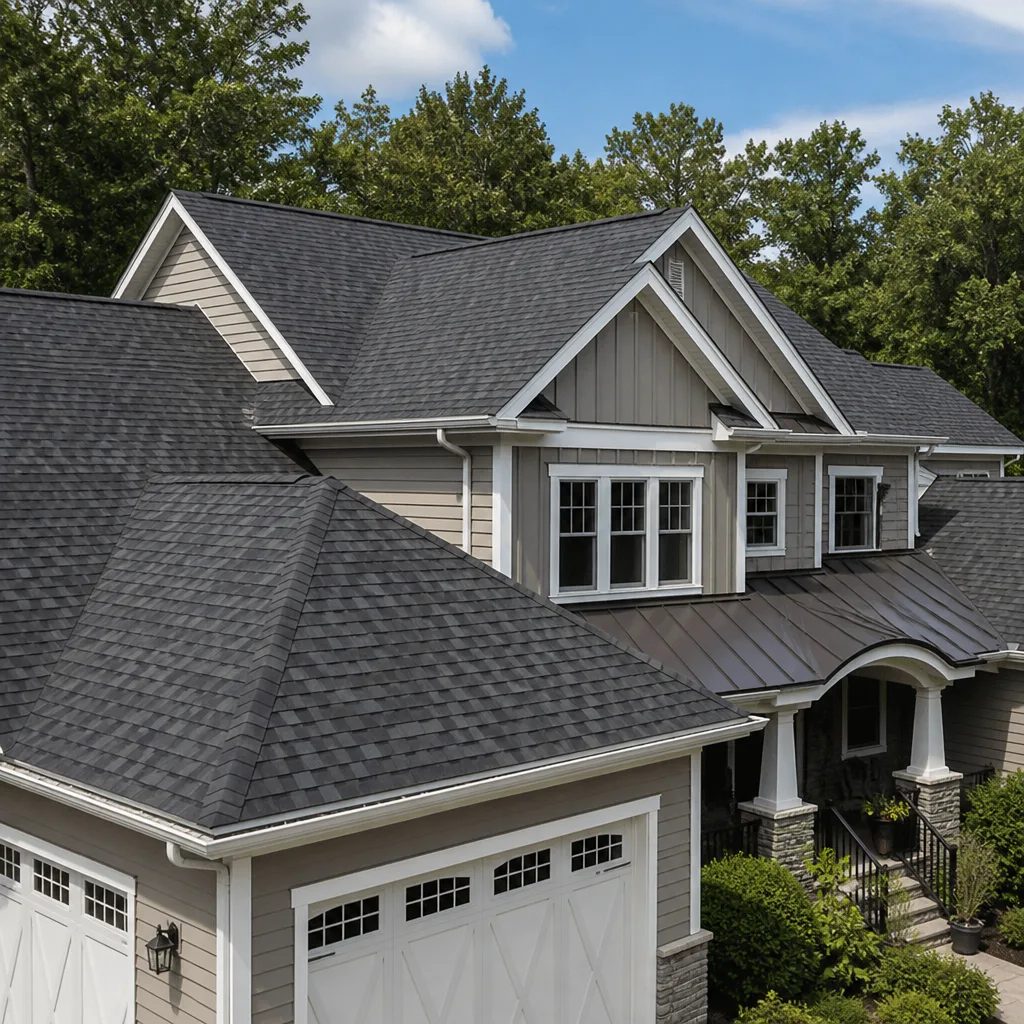 GAF
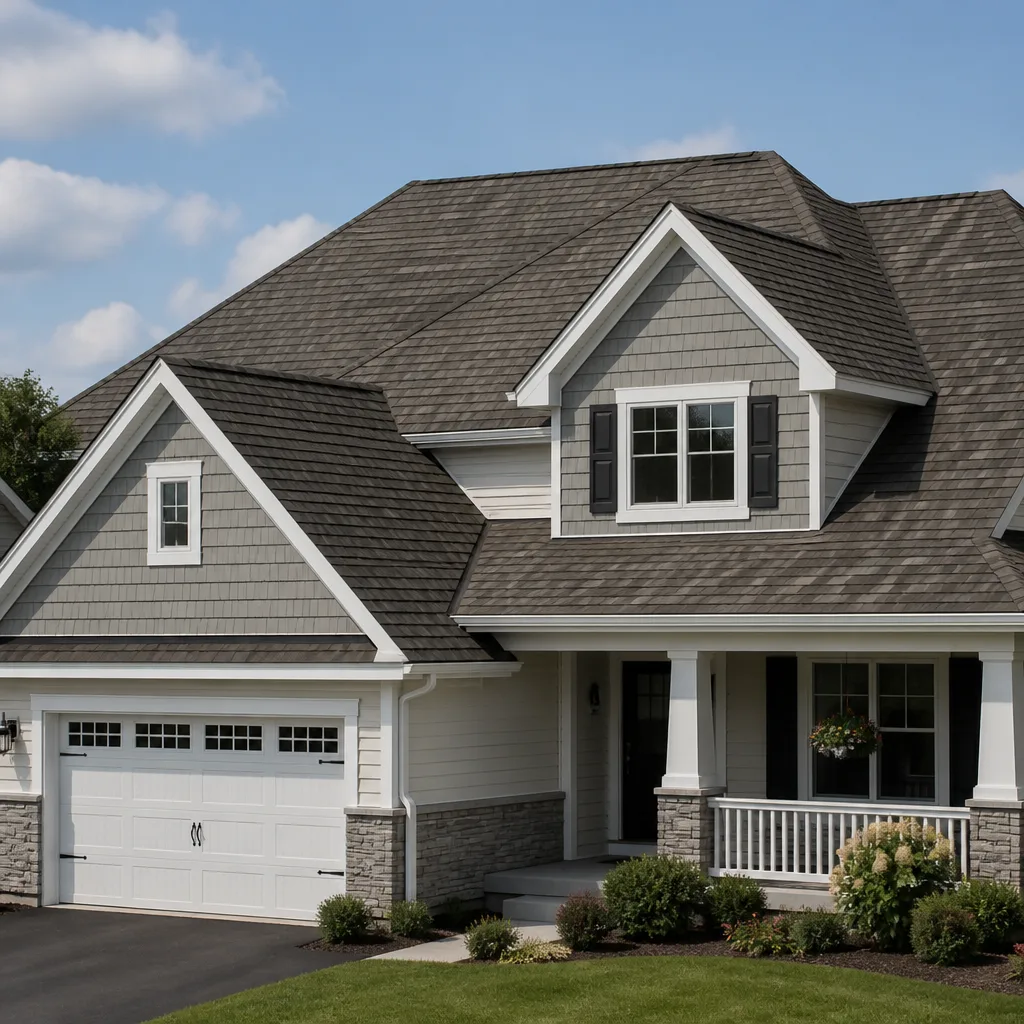 Owens Corning
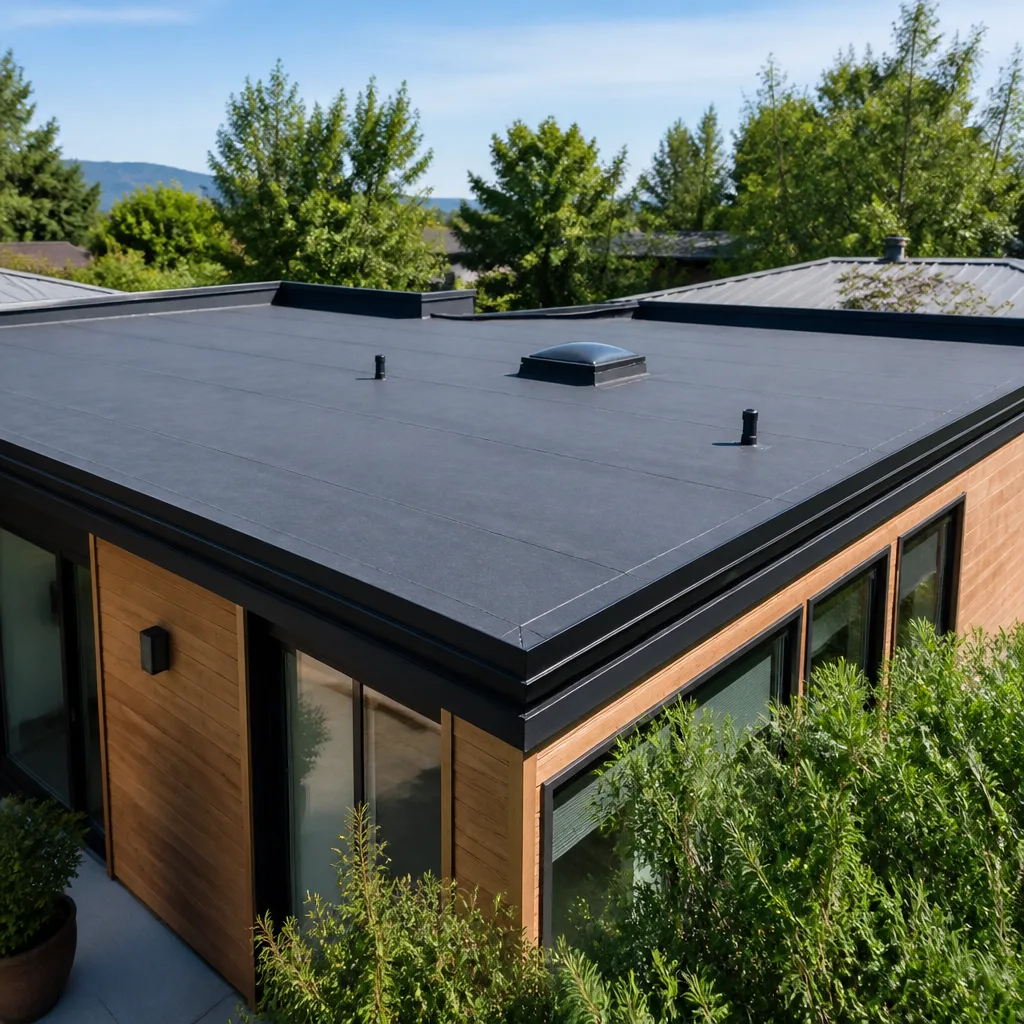 Flat & low-slope
Free roof inspection with deck photos before we talk money - GAF and Owens Corning certified installation
The Complete Roof Repair Guide for Orange Homeowners
Orange averages more than 280 sunny days a year, and that relentless UV exposure, not rain, is what quietly destroys most local roofs. Shingles here don’t fail because they get wet. They fail because the sun bakes them until they turn brittle, curl at the edges, and lose the granule layer that protects the asphalt underneath. This guide covers what actually goes wrong on Orange roofs, which repairs are worth doing, what the city requires, and how to choose a material that survives the next heat wave. For more guides & resources, explore our blog.
Quick Answer
Roof Repair services in Orange typically means addressing UV-damaged shingles, failed flashing, or backing-out fasteners caused by thermal expansion, and most spot repairs cost between $350 and $1,200 depending on scope. A professional inspection is the fastest way to know whether you need a targeted repair or a partial replacement. Windmill Roof Repair offers free estimates in Orange at (866) 850-2496.
Styles & brands we work with
Table of Contents
- Why Orange’s Climate Creates a Different Kind of Roof Damage
- Repair vs. Replacement: How to Decide Without Guesswork
- City of Orange Permit Rules for Roof Repairs
- Material Selection for Orange Heat: What Actually Holds Up
- The 5 Most Common Roof Repairs We See in Orange
- What a Proper Roof Inspection Should Cover
- Documentation Steps That Protect Your Insurance Claim
- What You Can Safely Check Yourself, and What You Shouldn’t Touch
Why Orange’s Climate Creates a Different Kind of Roof Damage
Roof failure in Orange follows a pattern most national guides never mention. The daytime sun drives attic temperatures past 140 degrees in July and August. At night, the roof surface cools by 40 or 50 degrees. That daily expansion and contraction cycle is what loosens roofing nails over time, a process called fastener backing. The nail doesn’t break. It slowly works its way up through the shingle, leaving a small bump that eventually cracks the shingle above it.
We see this on nearly every inspection in the Orange Park Acres and El Modena neighborhoods. Homeowners assume wind or age is the culprit. In most cases, it’s thermal cycling doing the slow work. The first sign is often a shingle that looks slightly raised, or granule loss concentrated in one strip across the roof. By the time a leak appears, the fastener has usually been backing out for two or three summers.
UV degradation is the second big factor. Orange sits far enough inland that marine layer burn-off happens early, which means roofs get the full dose of midday sun for most of the year. Asphalt shingles lose their protective granules through normal weathering, but in Orange the process accelerates. A 20-year shingle here often shows significant granule loss by year 12 or 13. That doesn’t mean the roof needs replacement, but it does mean repair decisions should account for accelerated aging compared to coastal Orange County cities.
Rain, when it does come, tends to arrive in concentrated bursts. A roof that’s been slowly degrading through the dry season can fail suddenly in a January storm because the underlying mat has been baking all year. This is why we tell Orange homeowners to address minor shingle issues in the fall, before the first heavy rain finds every weak point at once.
Repair vs. Replacement: How to Decide Without Guesswork
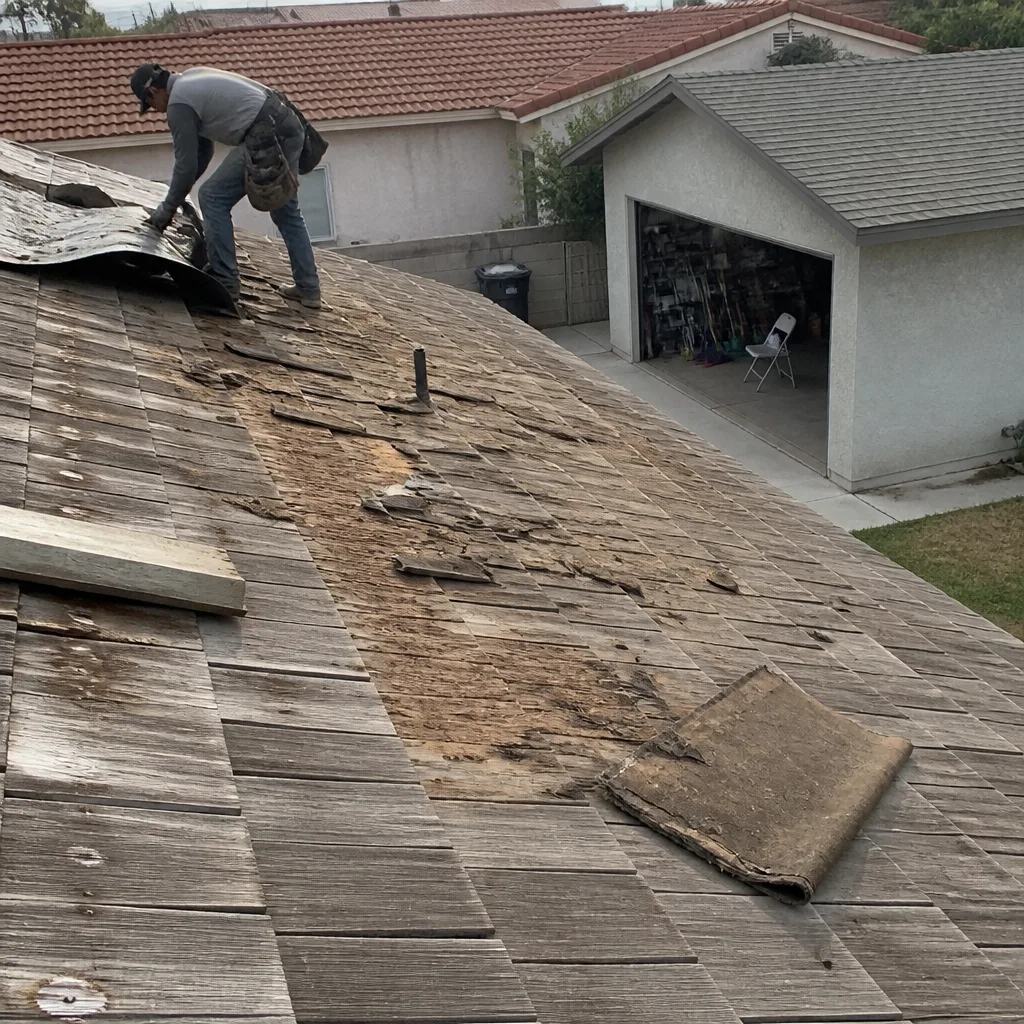
The honest threshold is this: if the damaged area is contained to one slope or less than roughly 15% of the total roof surface, a targeted repair is usually the right call. If damage spans multiple slopes, involves the underlayment, or the shingles are so brittle they crack when lifted, you’re looking at a partial or full replacement.
Here’s the step-by-step logic we use when advising Orange homeowners:
- Age the roof. If the roof is under 10 years old and shows isolated damage, repair almost always makes sense. Between 10 and 18 years, condition matters more than age. Past 18 years, even a “repairable” roof may be near the end of its functional life, and throwing money at patches becomes a losing proposition.
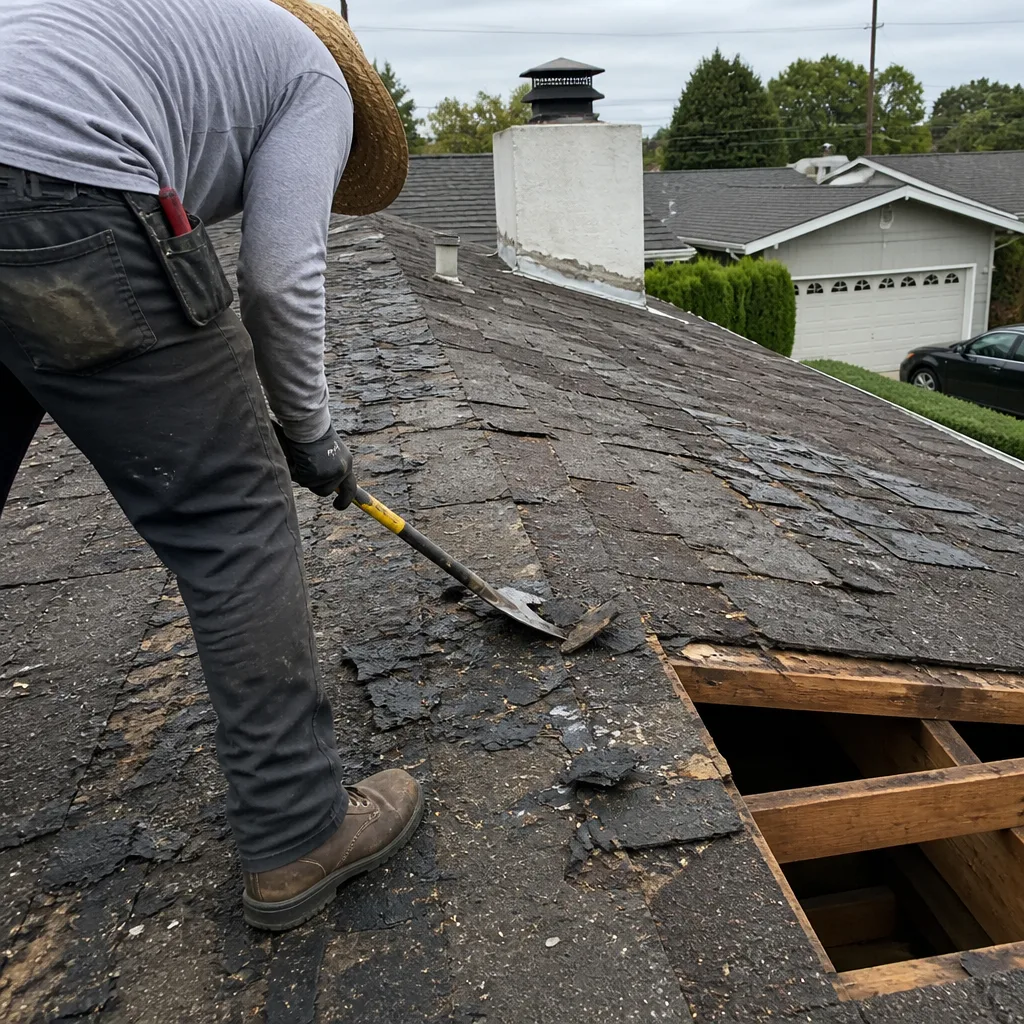
- Assess brittleness. A shingle that flexes without cracking can be lifted and replaced. A shingle that snaps when bent means the entire slope is nearing failure. In Orange, UV-cooked shingles often look fine from the ground but shatter the moment a repair crew tries to work with them.
- Locate the leaks. Do they cluster? One leak near a pipe boot or valley is a repair. Leaks appearing in multiple rooms, or staining visible on ceilings in different parts of the house, signal a systemic problem.
- Check the decking. If the plywood or OSB beneath the shingles is soft, delaminated, or water-stained, the repair scope expands. You can’t properly re-nail shingles onto compromised decking.
- Count the cost. A useful rule of thumb: if cumulative repair costs over the next 24 months would exceed 40-50% of a full replacement on that slope, replacement is the financially sound choice.
Windmill Roof Repair works this way deliberately. Repair is a genuine standalone service, not a consolation prize before we pitch a full roof. When a targeted repair is the right call, we say so. When replacement is unavoidable, we show you the photos and explain why. That’s the “repair when you can, replace when you must” approach in practice.
City of Orange Permit Rules for Roof Repairs
The City of Orange follows California Building Code with local amendments, and the distinction between what needs a permit and what doesn’t comes down to scope. Here’s the practical breakdown that matters to homeowners:
- Exempt (no permit required): Replacing individual damaged shingles, resealing a pipe boot or vent flashing, repairing a small section of step flashing, and other spot repairs that don’t involve structural changes or removal of the roof deck. Most repairs under roughly 100 square feet fall into this category.
- Permit required: Any repair that involves removing and replacing the roof deck (the plywood or OSB layer), changing the roof structure in any way, installing a new roof system on a building with existing permit violations, or any work that exceeds the city’s repair threshold. Full reroofs always require a permit and an inspection.
- Gray zone: Large partial replacements that cover a substantial portion of a slope may trigger the permit requirement even if they’re technically “repairs.” When in doubt, call the Building Division before work starts.
Skipping a required permit in Orange creates real problems. If you sell the home, an unpermitted roof will surface during the disclosure process. If an insurance claim is filed and the unpermitted work contributed to the loss, the claim can be denied. And if an inspector later discovers unpermitted work, the homeowner is responsible for bringing it into compliance, which often costs more than the original permit would have.
The permit itself for a standard repair is not expensive by construction standards. The cost comes from the inspection scheduling, the project delays, and any required corrections. That’s the price of doing it right, and it’s the only way that protects you long-term.
Material Selection for Orange Heat: What Actually Holds Up
Orange’s climate punishes the wrong shingle choice, and this is where working across multiple brands genuinely matters. Windmill Roof Repair installs seven leading shingle lines: GAF, CertainTeed, Owens Corning, IKO, Atlas, Tamko, and Boral. No single manufacturer is the right answer for every Orange roof. The right answer depends on your roof’s pitch, your exposure to afternoon sun, and your budget.
Here’s what we recommend considering for Orange specifically:
- Class 4 impact resistance. Orange sees occasional hail, but more importantly, Class 4-rated shingles from manufacturers like Atlas and Tamko hold their granule layer better under intense UV cycling. The impact rating translates to a denser, more resilient shingle that also handles thermal stress better.
- Cool-roof rated products. Shingles with high solar reflectance reduce attic temperatures by 15 to 25 degrees in Orange summers. That cut directly slows the thermal expansion that causes fastener backing. CertainTeed’s Landmark Solaris and Owens Corning’s Cool Roof Collection are both built for this. Lower attic heat also means lower cooling bills.
- SBS-modified asphalt. Compared to traditional oxidized asphalt, SBS-modified shingles stay flexible longer. In a city where brittleness is the primary failure mode, flexibility is the single most important material property. IKO’s Dynasty line and certain Boral products use SBS formulations that outperform standard shingles in UV-heavy climates.
- Lighter colors, unless HOA rules say otherwise. A medium-tone shingle absorbs dramatically less heat than a dark charcoal one. On a hot Orange afternoon, the surface temperature difference can be 30 degrees or more. Lighter shingles last longer here, plain and simple.
Because we’re not tied to a single brand’s availability, the conversation starts with what your roof actually needs. Not with “here’s what we carry.” Seven brands, one crew. The material decision should follow the roof’s condition and your long-term plans for the home, not a preferred-vendor arrangement.
The 5 Most Common Roof Repairs We See in Orange
If you live in Orange long enough, your roof will eventually need one of these five repairs. Knowing what they look like helps you catch problems early, when the fix is still measured in hundreds of dollars instead of thousands.
1. Flashing Failure at Valleys and Walls
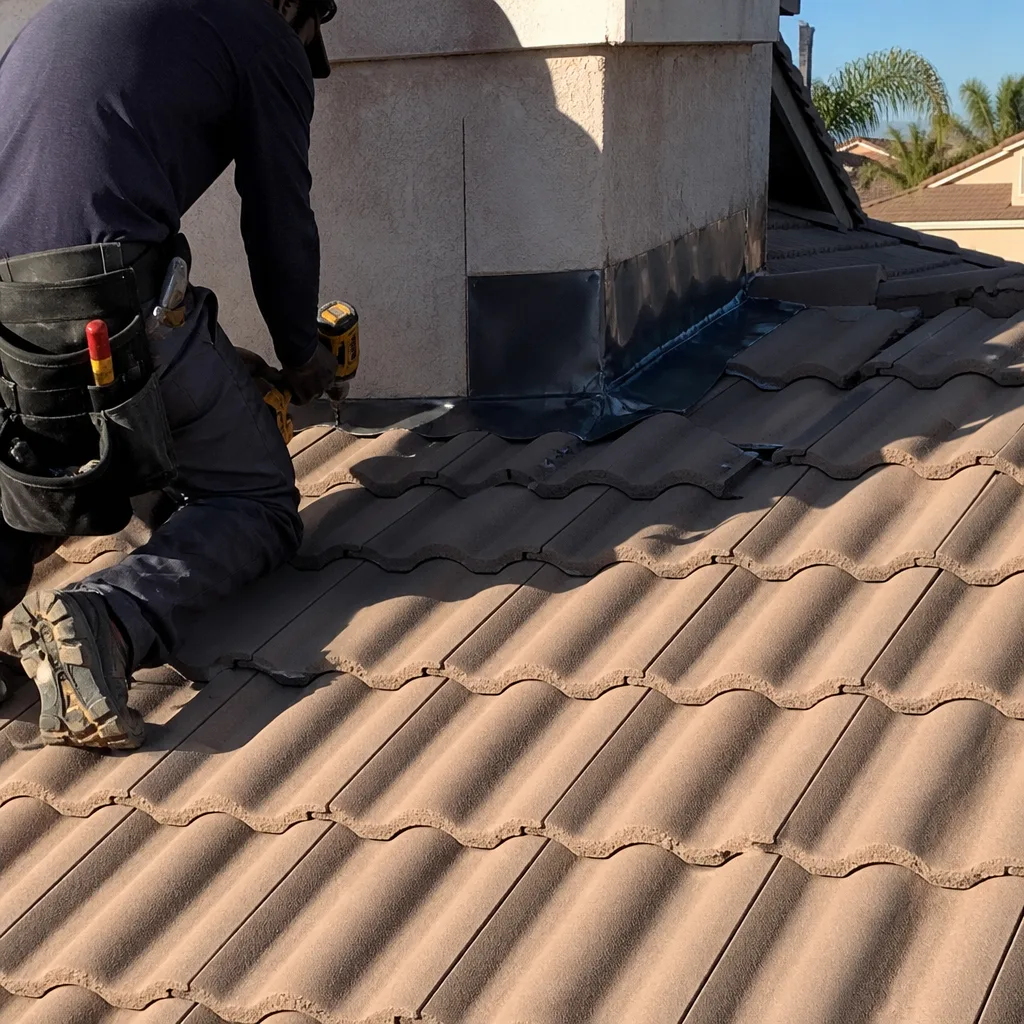
Roof flashing is the metal material that seals the roof at its transition points: where two slopes meet, where the roof meets a wall, around chimneys, and around skylights. In Orange, the thermal cycles that back out nails also work on flashing seams. The sealant that once kept water out breaks down, the metal expands and contracts at a different rate than the surrounding shingles, and gaps open up. Valley flashing failures are the single most common source of roof leaks in Orange, and they often present as water stains in living room or bedroom ceilings, nowhere near the actual leak location.
2. Fastener Backing
As described earlier, this is the Orange-specific problem that national guides miss. The nail works its way out of the decking over hundreds of heat cycles. The fix is straightforward: remove the raised fastener, reset it properly, and replace the damaged shingle. But if you see multiple backed-out nails on one slope, the whole slope is likely at the same stage of failure and should be evaluated as a unit.
3. Pipe Boot and Vent Deterioration
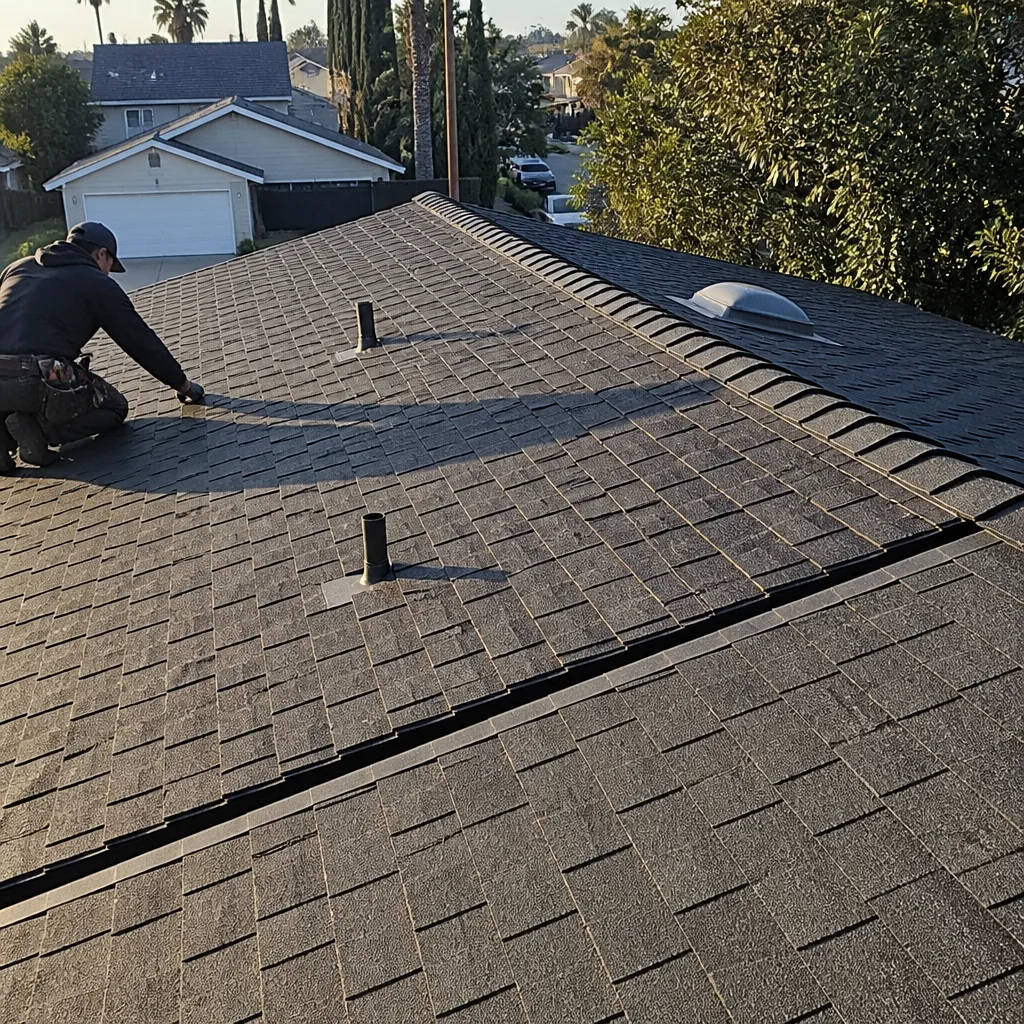
Those rubber or neoprene boots that seal plumbing vent pipes degrade quickly in Orange UV. After 8 to 10 years, they crack or crumble, and water follows the pipe straight into the attic. This repair is cheap (usually $250-$450) but causes damage that’s wildly out of proportion to the part cost because the leak often goes unnoticed for months.
4. Granule Loss and Blistering
Blisters are small bubble-like raised areas on shingle surfaces, caused by moisture trapped during manufacturing that expands under Orange sun. When blisters pop, they expose the asphalt underneath, which then degrades fast. Granule loss collects in gutters and at the bottom of downspouts. If you see significant granule accumulation after a light rain, your shingles are aging faster than their stated lifespan.
5. Ridge Cap Failure
The ridge cap is the row of shingles running along the roof’s peak, and it takes the most direct sun of any surface on the house. Ridge caps in Orange often fail several years before the field shingles do. The caps crack down the center where they bend over the ridge. This repair is isolated and inexpensive if caught early, but a failed ridge cap allows water into the attic, where it travels along the framing and stains ceilings far from the peak.
What a Proper Roof Inspection Should Cover
A real roof inspection in Orange takes 45 to 90 minutes and covers both the rooftop and what’s underneath it. Windmill Roof Repair offers inspection as a standalone service, not a sales pitch with a clipboard. You should know exactly what a thorough inspection includes so you can tell the difference.
Here’s the five-part checklist we follow:
- Surface condition. We walk every accessible roof slope checking for cracked, curled, or missing shingles, granule loss, blistering, and any visible fastener backing. We photograph everything we find.
- Flashing and penetrations. Every valley, sidewall, chimney, skylight, pipe boot, and vent gets individually examined. This is where most roof leaks originate, and it’s the part of an inspection that’s impossible to do properly from the ground.
- Attic evaluation. From inside the attic, we check the underside of the decking for water stains, mold, soft spots, and daylight penetration. We also evaluate ventilation. A roof that can’t breathe properly in Orange heat fails years earlier than one with adequate intake and exhaust airflow.
- Interior signs. Ceiling stains, peeling paint near the roofline, and walls that show water marks are all mapped. These help narrow down where roof water is actually traveling, which is rarely straight down.
- Documentation. You receive a written report with photos, a prioritized list of issues, and clear recommendations separated into what needs attention now, what should be monitored, and what’s in good shape. You see everything before you’re asked to sign anything.
The inspection is the honest entry point to any repair conversation. You shouldn’t have to commit to work to know what’s wrong with your roof. And you shouldn’t have to take a contractor’s word for it without photographic evidence.
Documentation Steps That Protect Your Insurance Claim
If roof damage in Orange is storm-related or tied to a specific event rather than long-term wear, your homeowner’s insurance may cover the repair or replacement. The difference between an approved claim and a denied one often comes down to documentation. Here’s how to protect yourself:
- Photograph immediately after the event. The day the storm passes or you notice the leak, take photos of the roof from every angle you can safely access, plus any interior water damage. Date-stamp the photos if possible.
- Mitigate further damage. Insurance policies require homeowners to take reasonable steps to prevent additional loss. A tarp over the damaged area (professionally installed is best) shows good faith. Keep all mitigation receipts.
- Document the roof’s pre-damage condition. If you have inspection reports, repair receipts, or photos from previous years, they establish the roof was in good condition before the event. This is one reason an annual inspection is worth the cost: it creates the baseline your claim depends on.
- Get a written repair estimate from a licensed contractor. A detailed, line-item estimate gives your adjuster something concrete to work with. Vague descriptions lead to lowball offers.
- Be present for the adjuster’s inspection. Walk the roof with the adjuster if safely possible, or have your roofer present to point out damage that’s visible from the rooftop but not obvious from the ground. Adjusters miss things. Your roofer is your advocate in that conversation, not just a bidder.
One more Orange-specific note: after the strong Santa Ana wind events we get in the fall and early winter, many homeowners discover lifted shingles and displaced ridge caps. Filing promptly matters. Insurance companies look more favorably on claims filed within weeks of the event than those filed months later when the damage has compounded.
What You Can Safely Check Yourself, and What You Shouldn’t Touch
There’s a difference between inspecting your roof from the ground and doing work on it. The first is smart. The second is dangerous. More homeowners are seriously injured on ladders and roofs than in any other type of home improvement activity. Steep-slope roofs in particular are not a place to test your balance. Read our DIY vs Professional Roofing: The Orange Homeowner’s Decision Guide before deciding.
Here’s what’s reasonable for a homeowner to do:
- Visual checks from the ground. Walk the perimeter of your home with binoculars. Look for missing shingles, visible cracks, lifted ridge caps, and any flashing that appears bent or separated. Check the downspouts for granule accumulation after rain.
- Attic inspection on a cool morning. Bring a flashlight and look for water stains on the underside of the roof deck, especially around penetrations like pipes and vents. Look for any light coming through the roof surface.
- Ceiling and wall monitoring inside. After heavy rain, check ceilings and upper walls for new water stains. Mark and date them. If they grow, you have an active leak.
Here’s what to leave to a professional:
- Getting on the roof. Falls from single-story roofs cause serious injuries every year in Orange County. Two-story falls are routinely fatal. No roof repair is worth your life or your mobility.
- Any repair involving shingle removal. Lifting a shingle wrong breaks the seal and creates a leak that’s worse than the original problem. Walking on a brittle Orange roof can crack a dozen shingles in a few steps.
- Flashing work at chimneys or sidewalls. These transitions are the most common leak points, and proper repair requires understanding how water flows across a roof surface. A homeowner’s best-effort caulk job rarely lasts a summer of Orange heat.
- Anything involving the roof’s structural decking. If you have a soft spot, the damage is more than surface-level, and the repair needs to be done by someone who can evaluate the framing underneath.
Safety first. If you can’t evaluate the roof safely from the ground or attic, that’s exactly what an inspection is for.
Common Mistakes to Avoid
- Ignoring granule loss because “it’s just cosmetic.” Granule loss is the leading indicator of UV aging on Orange roofs. Once the granules go, the asphalt mat underneath degrades rapidly. What looks cosmetic from the ground is structural decline up close.
- Patching without addressing the underlying cause. Replacing a shingle over a backed-out nail without resetting the fastener means you’ll replace that shingle again next year. The shingle is the symptom. The fastener is the problem.
- Using the wrong sealant on flashing. Standard silicone caulk breaks down under Orange UV faster than most homeowners expect, often within a single summer. Roofing mastics and proper flashing replacement are the only durable answers.
- Skipping the permit when one is required. It’s tempting to save the permit fees and the inspection hassle. The risk transfers to your home sale, your insurance coverage, and any future code enforcement. The short-term savings aren’t worth the long-term exposure.
- Choosing a shingle brand before choosing a roofer. If your contractor only installs one brand, they’ll recommend that brand regardless of whether it’s right for your roof. Working with a multi-brand contractor like Windmill Roof Repair flips that equation: the roof’s needs drive the material choice, not the contractor’s inventory.
- Waiting until the rainy season to address known issues. The dry season is the best time to repair an Orange roof. Contractors are available, materials cure faster in warm weather, and you’re not racing an impending storm. Every year, we get calls in the first week of January from homeowners who knew about a problem in August.
- Assuming a roof leak is directly above the stain. Water travels across the roof deck, down rafters, and along joists before it shows up on a ceiling. The actual entry point is often ten feet or more from the visible stain. This is why a professional inspection matters: fixing the wrong spot doesn’t stop the leak.
See the difference
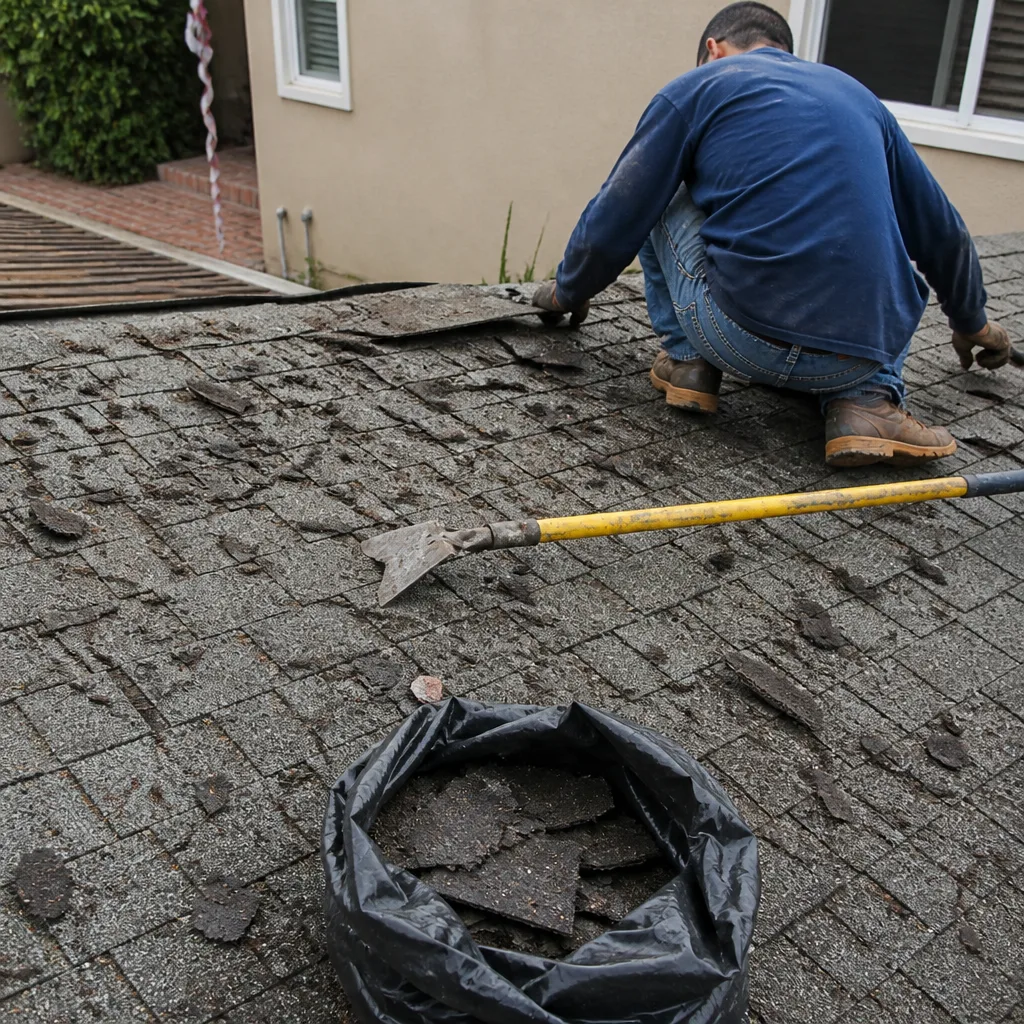 Before
 After
 Before
 After
 Before
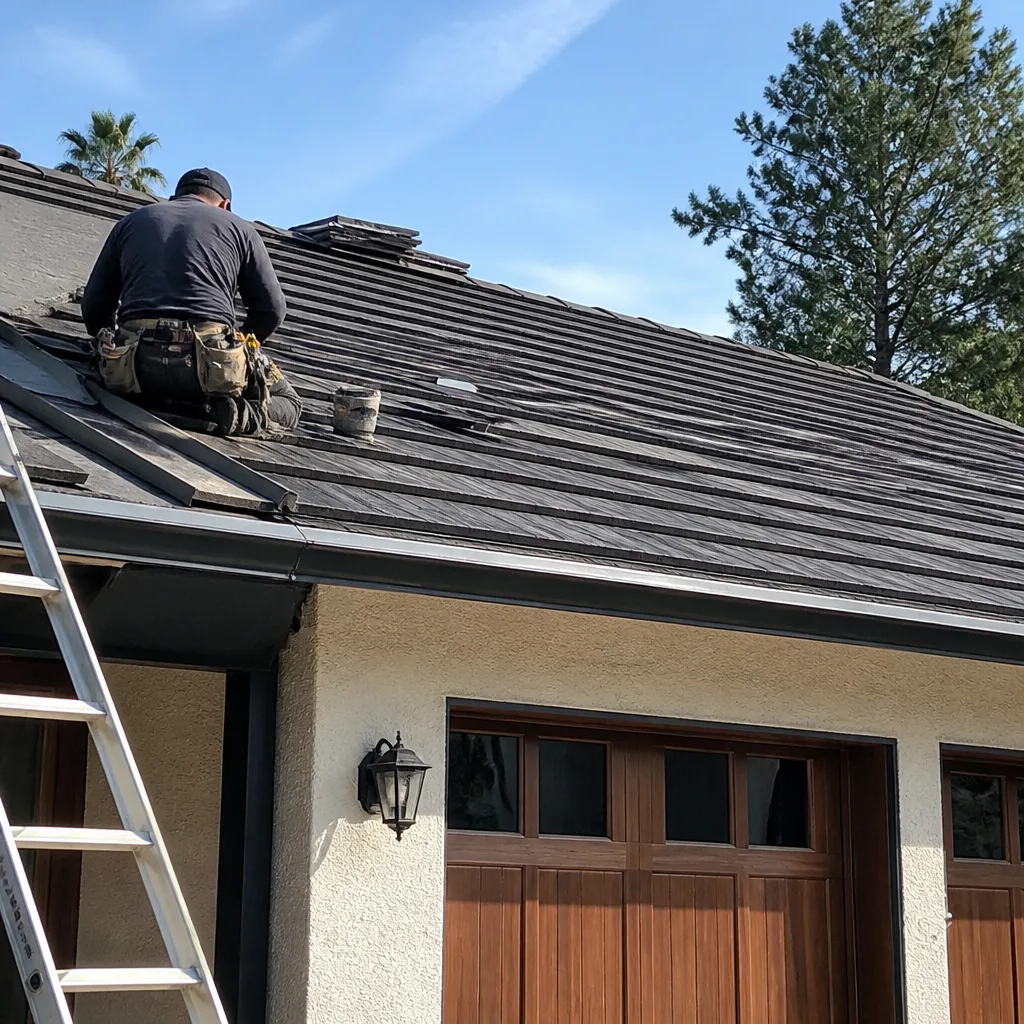 After
When to Call a Professional
You should call a roofing professional the moment you see water staining on a ceiling or wall, whenever you notice missing or visibly cracked shingles after a storm, or when your roof passes the 12-year mark and hasn’t been inspected. Our How to Hire a Roofing Contractor in Orange: A Step-by-Step Guide can help you choose wisely. Any signs of a soft spot in the roof deck, any daylight visible through the attic roof surface, or any shingle that lifts easily when nudged from the edge are all calls for immediate attention. Waiting on these problems in Orange heat only accelerates the underlying damage. Windmill Roof Repair offers free estimates in Orange. Call (866) 850-2496 to schedule yours, and you’ll get an honest assessment of whether you need a repair, a monitoring plan, or a replacement. See it before you sign anything.
Frequently Asked Questions
Most targeted roof repairs in Orange cost between $350 and $1,200, with flashing work, pipe boot replacement, and isolated shingle replacement at the lower end and larger partial-slope repairs at the higher end. The final number depends on the scope, the roof’s pitch, and whether any decking needs replacement. Call (866) 850-2496 for an exact quote. Estimates are free.
Most spot repairs, including individual shingle replacement and flashing repair, do not require a City of Orange permit. Partial replacements that include structural decking work are more likely to trigger the permit requirement, as are full reroofs. When the scope is unclear, the Building Division can confirm before any work starts.
A typical spot repair takes half a day to a full day, depending on the scope and whether materials need to be matched. Larger partial replacements can take two to three days, not including any required city inspection. The repair itself is usually the fastest part. The inspection and material matching often take longer.
Orange’s inland location means the marine layer burns off early, exposing roofs to more hours of direct UV each day. The intense solar heat, combined with daily temperature swings of 40 degrees or more, accelerates shingle brittleness, granule loss, and fastener backing. The same shingle often lasts noticeably longer in cities like Newport Beach or Huntington Beach.
Yes. Part of the inspection process involves identifying the shingle brand and color so your repair matches as closely as possible. Since Windmill Roof Repair works across seven major brands, including Atlas, Tamko, IKO, and Boral, we’re more likely to have access to a close or exact match than a single-brand contractor.
If the damage is tied to a specific event, like a Santa Ana windstorm or hail, your homeowner’s insurance may cover the repair or replacement. If the damage is from long-term wear and aging, it’s typically excluded as normal maintenance. The quality of your documentation, including photos and prior inspection reports, directly affects whether a claim is approved.
The Bottom Line
Roof repair in Orange is about understanding how local conditions, not generic national patterns, affect your home. The sun is your roof’s biggest threat here, and the thermal cycling it causes is behind the fastener backing, flashing failure, and premature shingle aging we see across the city. The right repair decision comes from an honest inspection, not a sales push. Know your roof’s age, document everything, understand when a permit applies, and choose a material that’s actually built for Southern California heat. And if you need professional eyes on it, Windmill Roof Repair home is the place to start. For homeowners in nearby areas, we also offer Roof Repair in Pico Rivera, Roof Replacement in Pico Rivera, and Roof Inspection in Pico Rivera.
Written by the team at Windmill Roof Repair, serving Orange since 2018.