Last updated October 31, 2026
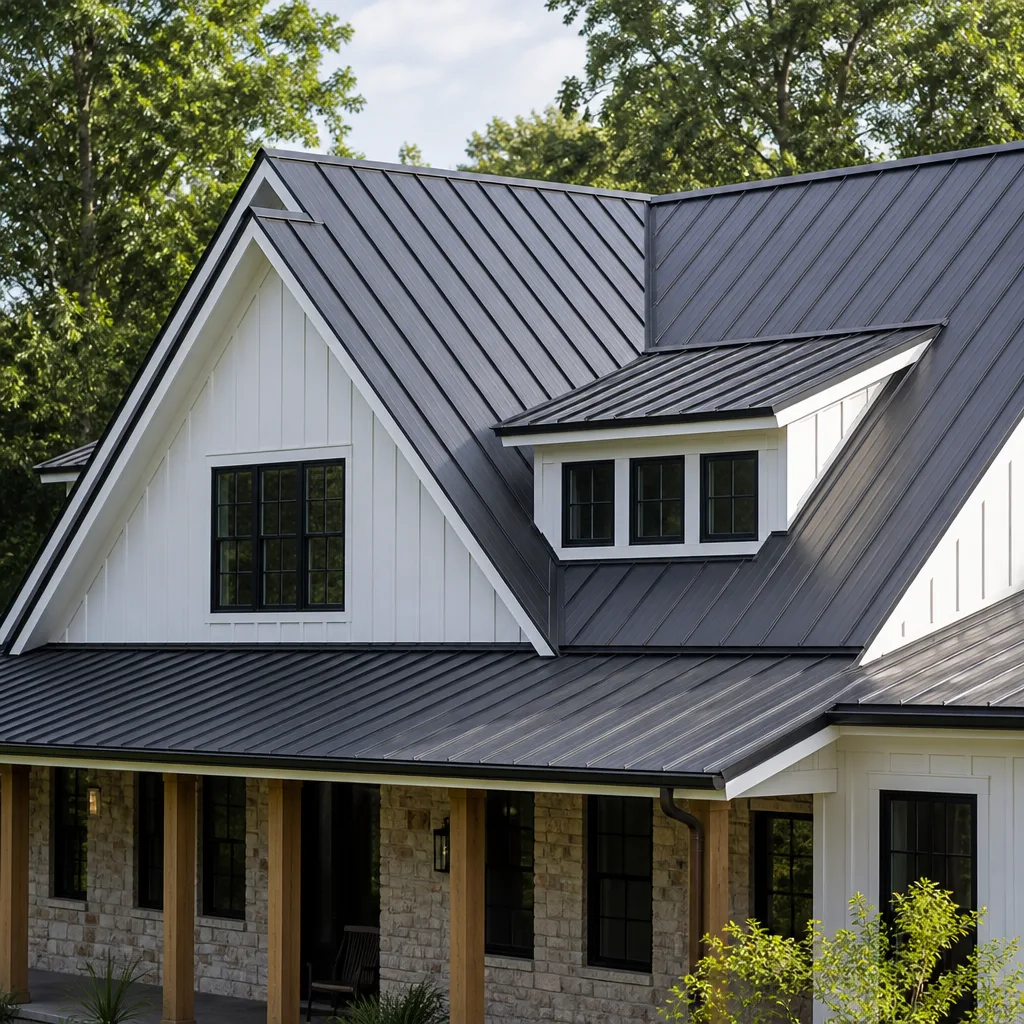 Metal roofing
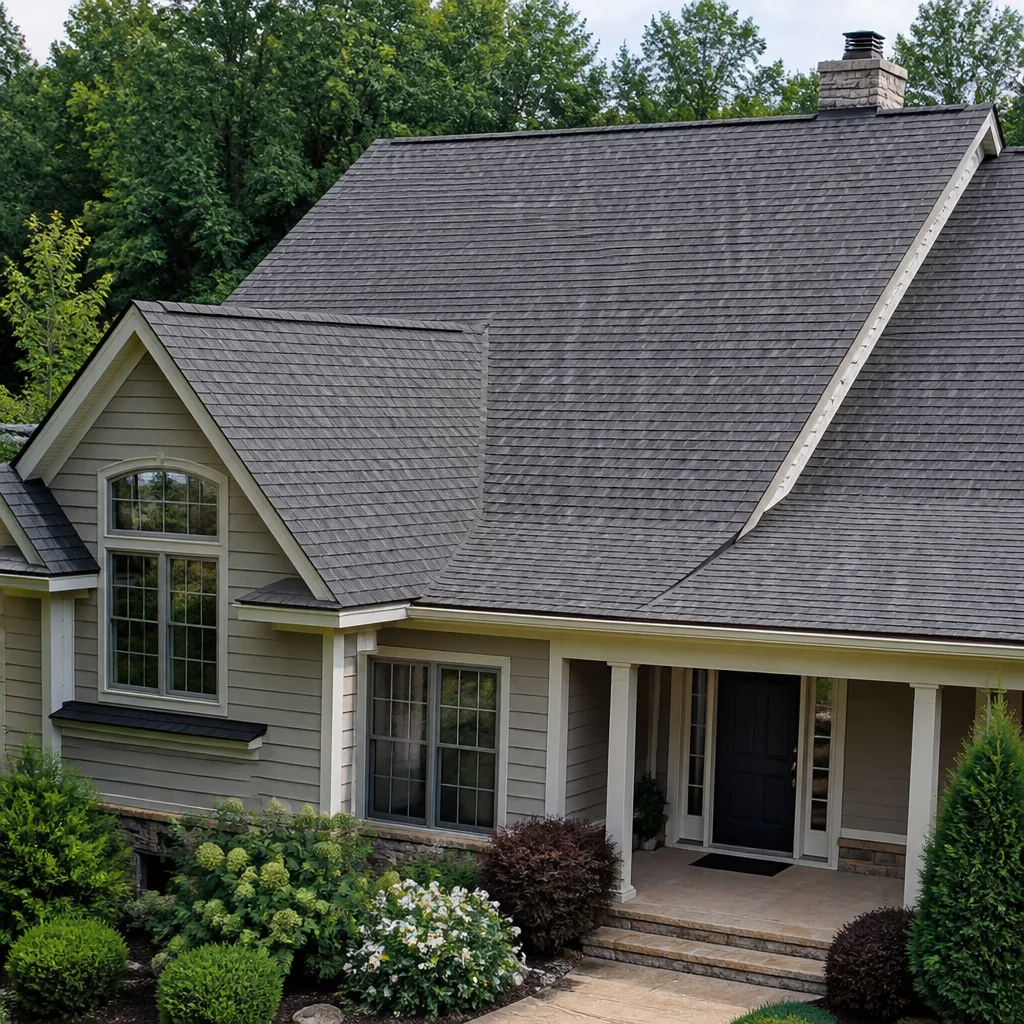 Architectural shingles
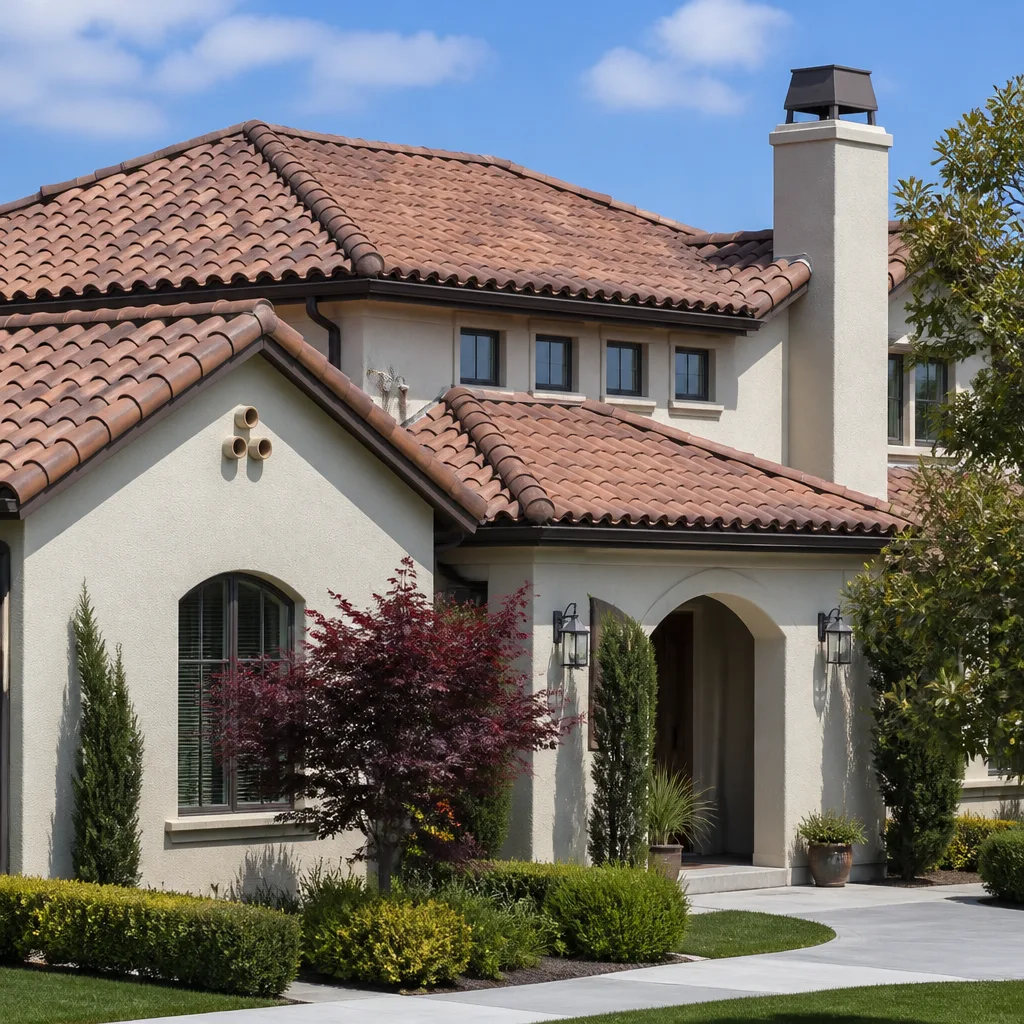 Tile roofing
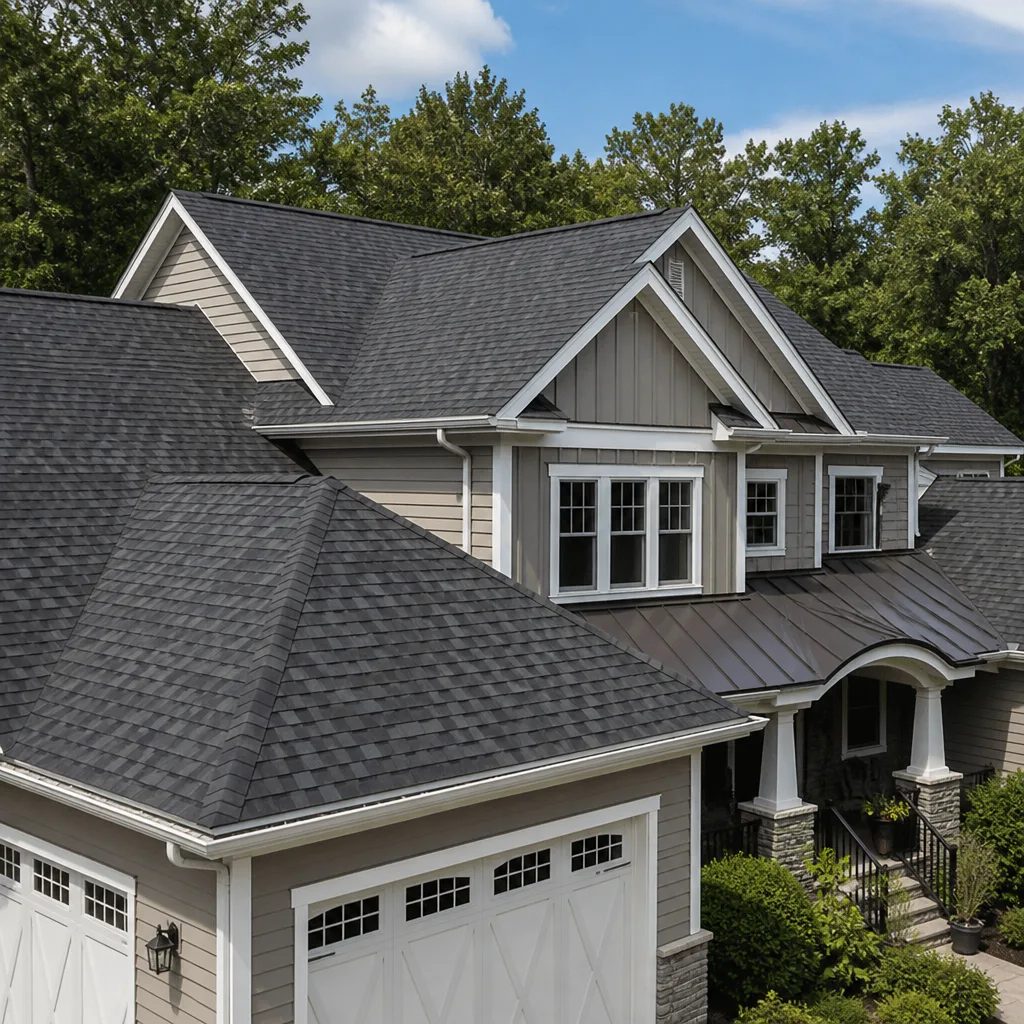 GAF
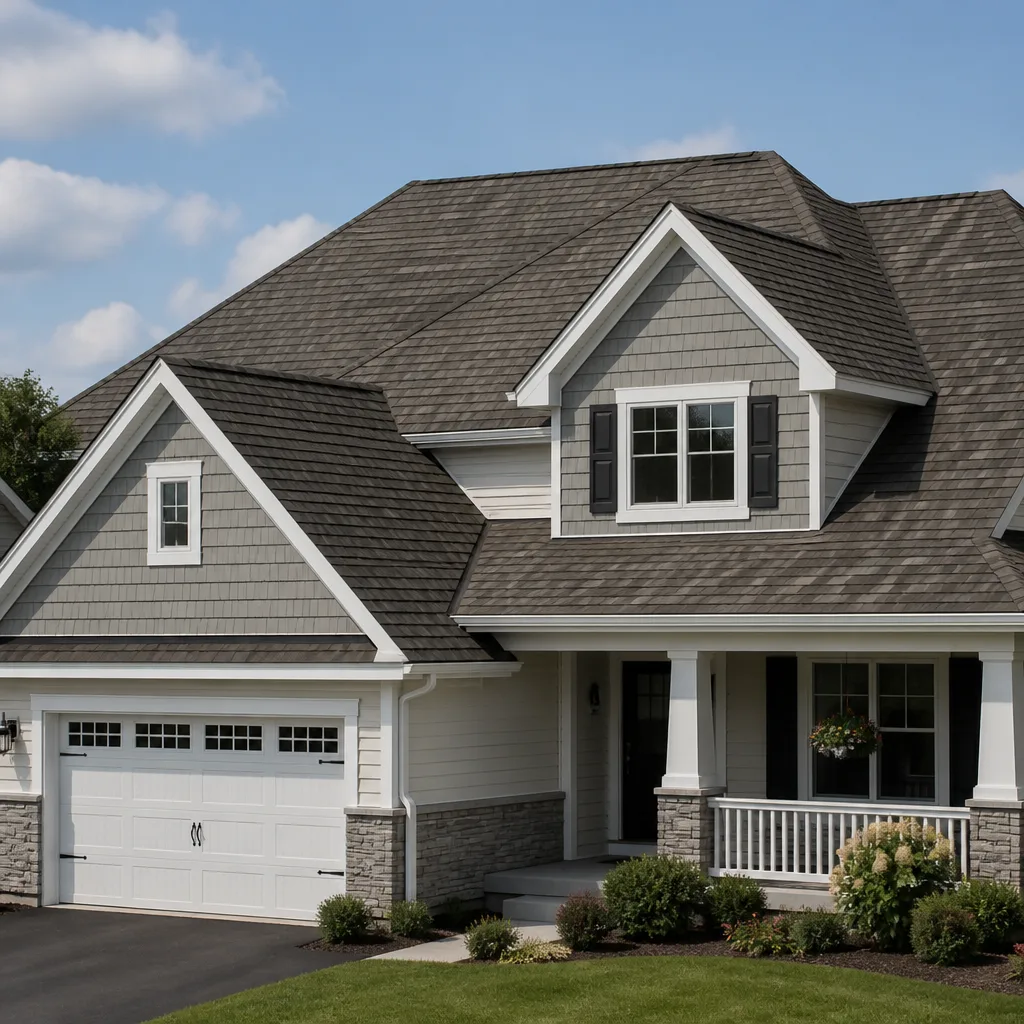 Owens Corning
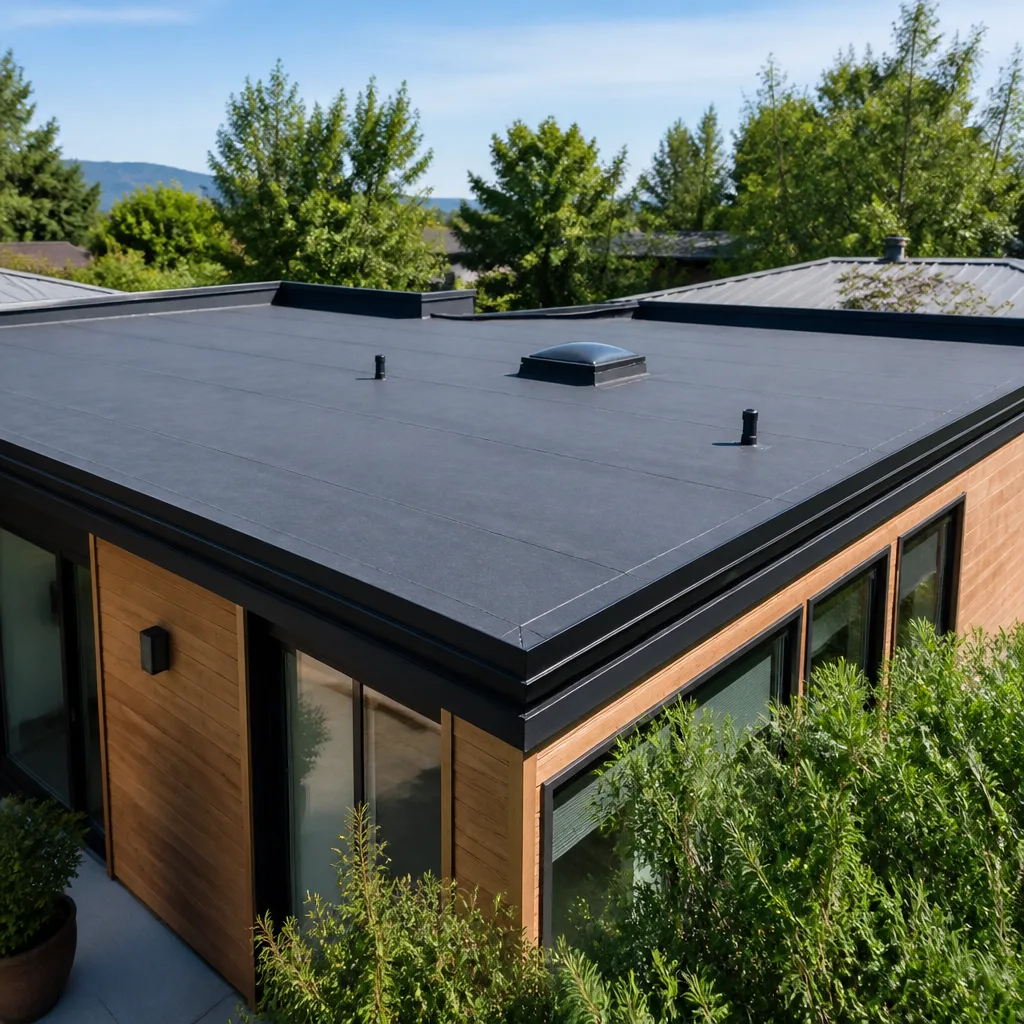 Flat & low-slope
Free roof inspection with deck photos before we talk money - GAF and Owens Corning certified installation
Roofing Cost Breakdown: The Orange Homeowner’s Reference for 2026
Two Orange homeowners with nearly identical roofs can receive estimates $4,000 apart, and neither of them knows enough about roofing cost structure to tell which one is fair. The difference is almost never the shingles. It’s in the line items nobody explains: decking replacement triggers, underlayment tier choices, flashing detail counts, and labor multipliers hidden inside the square price. This guide walks through every component of a roofing bid in plain terms, with realistic 2026 ranges for the Orange market, so you can read an estimate the way a roofer reads it and spot exactly where the money is going before you sign. For Roofing Warning Signs: A Orange Homeowner’s Reference Guide on when replacement makes sense, see our related guide.
Styles & brands we work with
Quick Answer
A full roof replacement in Orange, CA in 2026 typically runs $9,800 to $22,000 for a standard single-story home, with tear-off, underlayment, field shingles, flashing, and labor making up about 85% of the total. Component pricing breaks down to roughly $90-$140 per square for tear-off, $110-$175 per square for installation labor, $95-$185 per square for architectural shingles, and $45-$90 per square for synthetic underlayment. The two biggest variables that move your final number are roof complexity (pitch, valleys, story count) and the hidden decking replacement charges that get triggered only after the old roof comes off.
Table of Contents
- Tear-Off and Disposal: The First Real Line Item
- Decking Inspection and Replacement: The Hidden Trigger Charge
- Underlayment: The Layer You Never See That Determines Roof Life
- Field Shingles: How Material Tier Actually Moves Your Price
- Flashing, Ridge, and Detail Work: Where Cheap Bids Fall Apart
- Labor Multipliers: Pitch, Stories, and Orange’s Hillside Reality
- Hidden Cost Categories Homeowners Don’t Budget For
- Warranties: What You’re Actually Paying For vs. What’s Called a Warranty
- Common Mistakes to Avoid
- When to Call a Professional
- Frequently Asked Questions
- The Bottom Line
Tear-Off and Disposal: The First Real Line Item
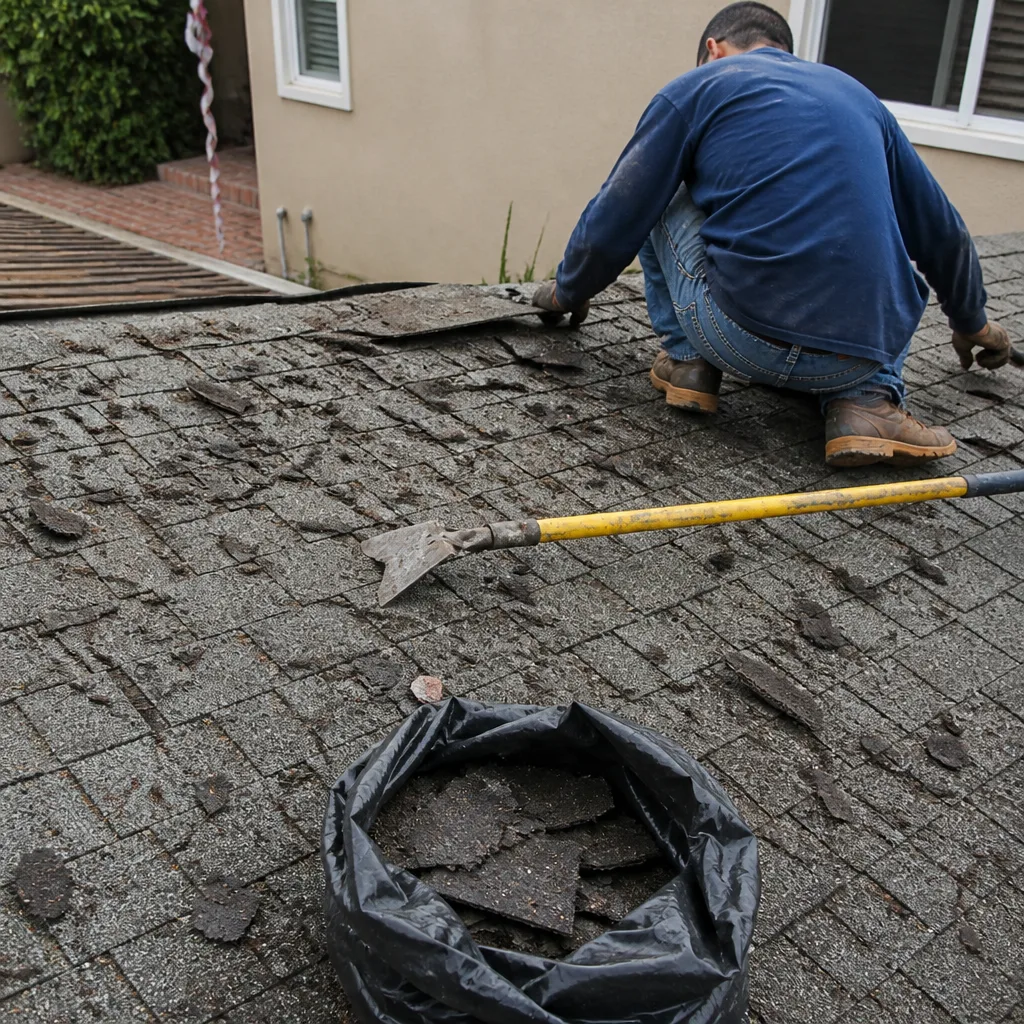
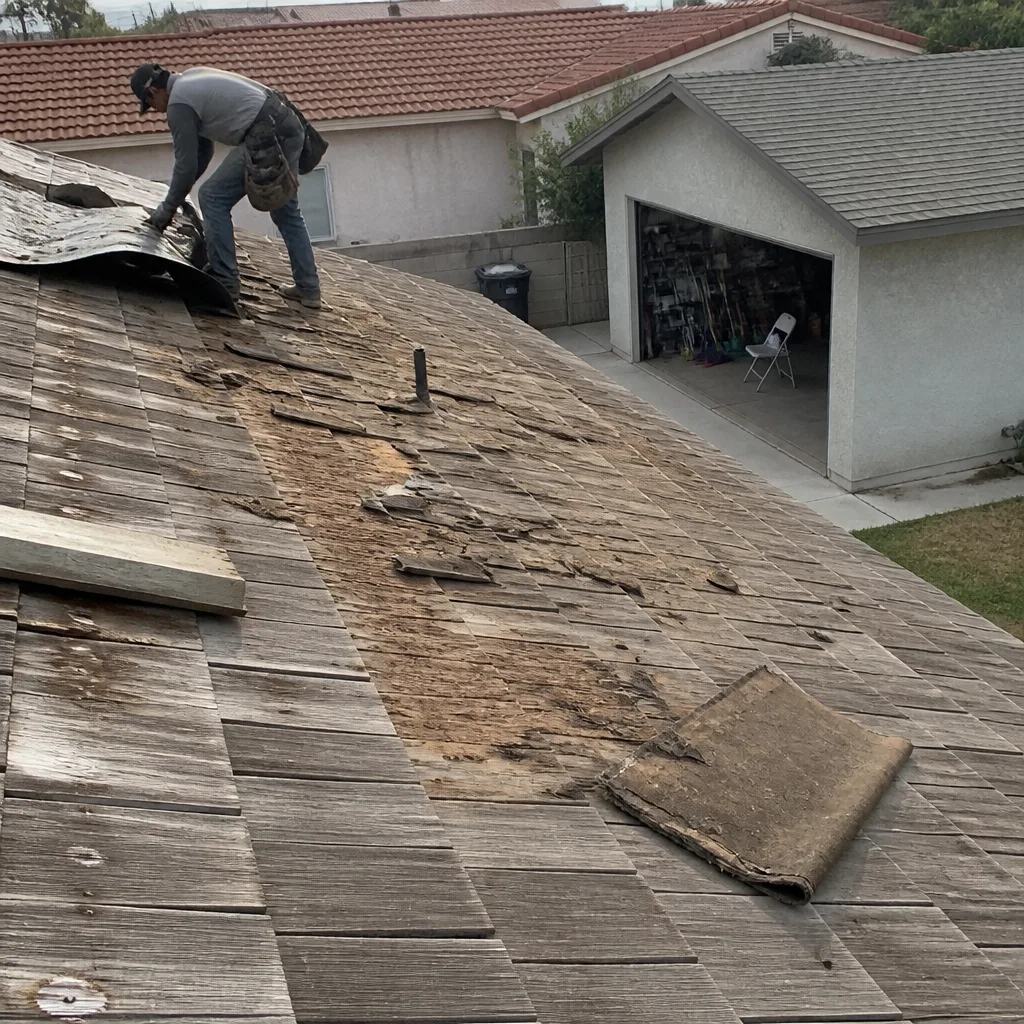
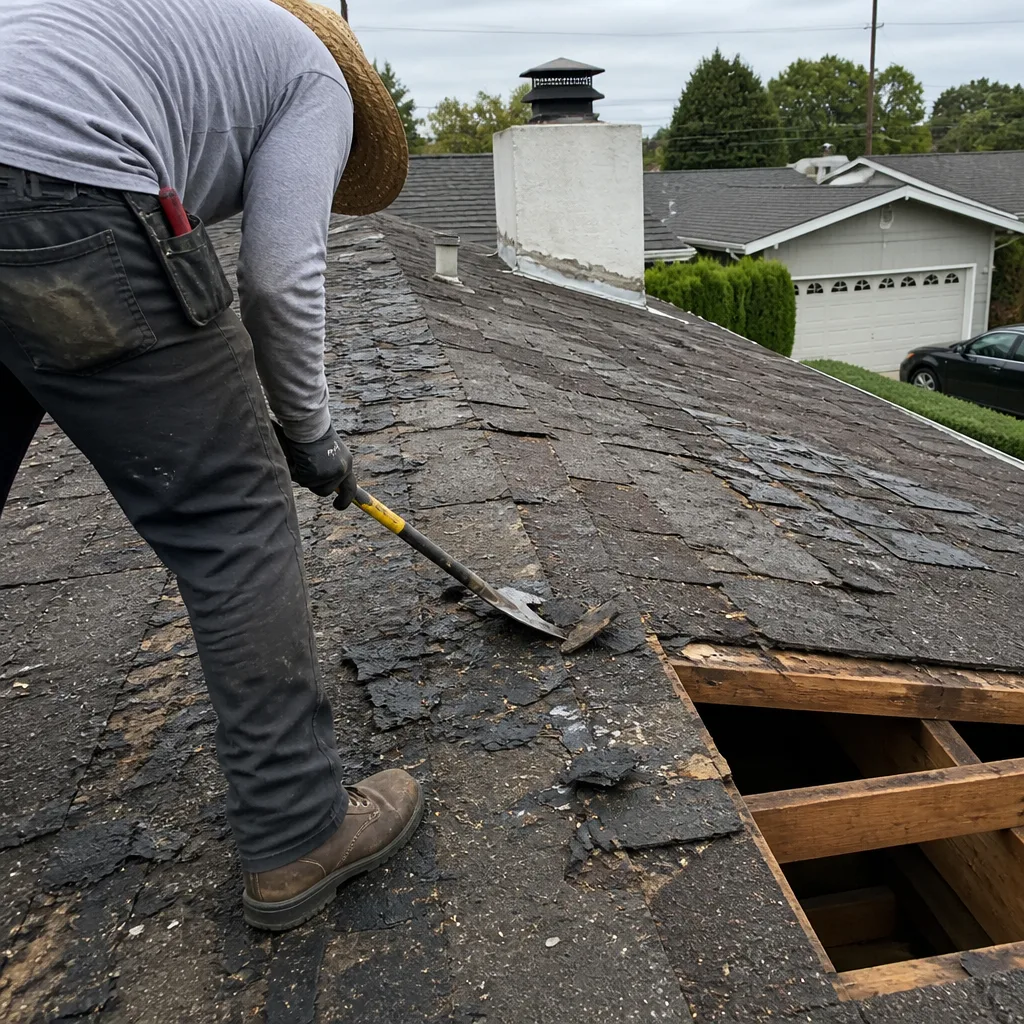
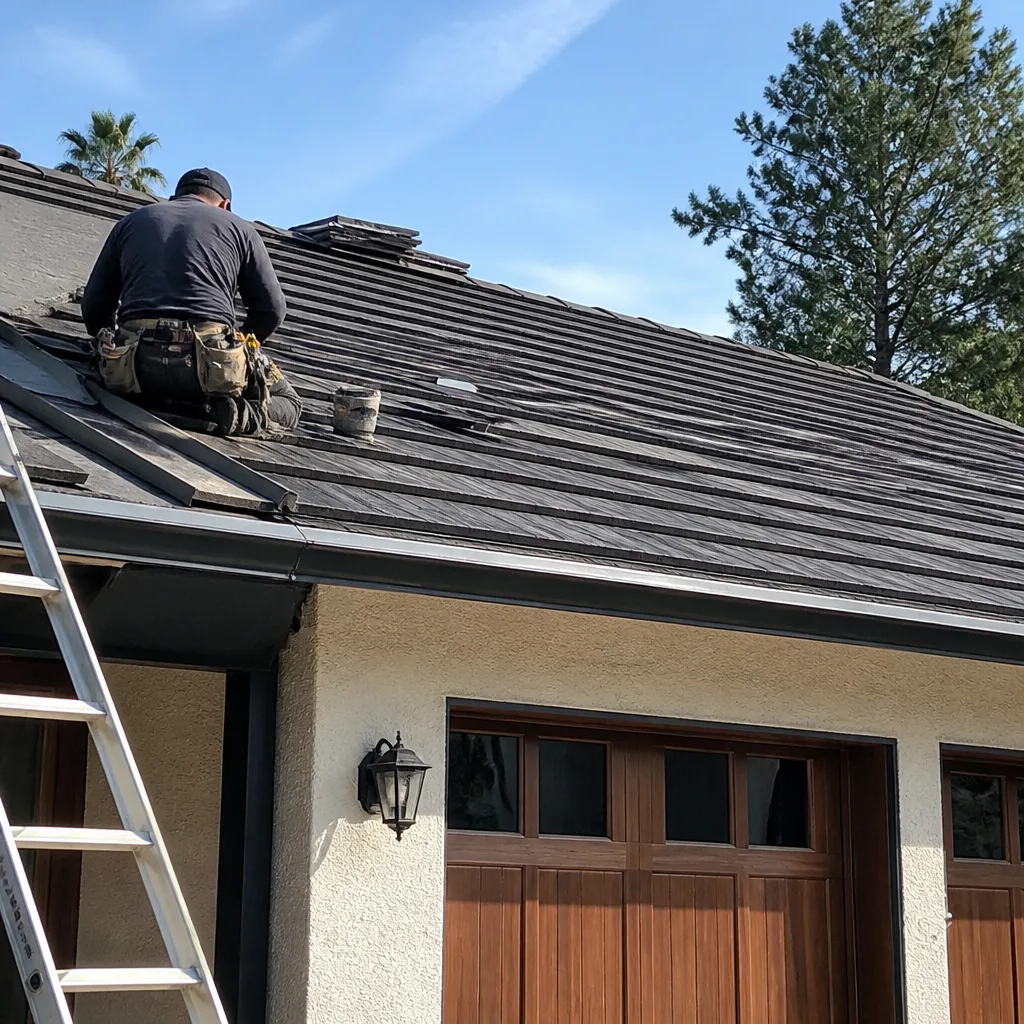
Tear-off in Orange runs $90 to $140 per roofing square (a square is 100 square feet, the standard unit in roofing bids). For a 1,800-square-foot single-story home, that’s roughly $2,000 to $3,000 before anything new goes on. This line item covers removing the existing shingles, hauling them away, and the dumpster or trailer fees that come with disposal. In Orange, dumpster placement can be a real line item on its own: $400 to $700 depending on whether the bin sits in your driveway or needs a street permit. Homes in older Orange neighborhoods with narrow driveways or limited side access often pay on the higher end because crews have to shuttle material by hand instead of using a conveyor or loading ramp.
Some bids fold tear-off into a single “labor” number. We recommend asking for it as a separate line item. When tear-off is hidden, you can’t compare it across estimates, and that’s exactly where scope creep hides. A legitimate roofing estimate should show demolition and disposal as its own cost, just like a mechanic’s invoice shows labor and parts separately. If a contractor won’t break it out, that’s a signal worth paying attention to. It doesn’t mean the bid is bad, but it means you’re flying blind on one of the largest cost categories in the job.
Decking Inspection and Replacement: The Hidden Trigger Charge
Decking is the plywood or OSB sheathing under your shingles, and it’s the line item that catches Orange homeowners off guard more than any other. Here’s how it works: the estimate you sign almost never includes decking replacement, because nobody can see the decking until the old roof comes off. What the estimate includes is a per-sheet price that kicks in if the crew finds rotted or delaminated sections during tear-off. In Orange, that per-sheet number is typically $75 to $115 installed, and on a 1,800-square-foot roof, replacing just 8 to 10 sheets adds $600 to $1,150 to the final bill.
Homes built before the early 2000s in Orange are more likely to have 3/8-inch or 1/2-inch CDX plywood that has softened over decades of heat cycling and the occasional leak. Orange’s summer heat, with attic temperatures regularly pushing 140°F, accelerates plywood delamination. If your home is 25-plus years old, budget for at least a handful of decking sheets to be replaced. We tell homeowners to plan for decking replacement as a probability, not a possibility. The good news: when the decking is solid, that trigger never fires, and your final price matches your estimate. When it does fire, you’ll be glad the per-sheet rate was documented in writing before work started.
A roof inspection before you sign a replacement contract can sometimes catch decking issues early, especially in the attic. Walk the attic with your roofer and look for dark stains, soft spots, or visible sagging between rafters. It won’t eliminate the trigger charge, but it gets you closer to a realistic number before the tear-off starts. That’s the value of getting a Roof Inspection in Pico Rivera style assessment done honestly, whether it’s from us or anyone else: the more you know before tear-off, the fewer surprises.
Underlayment: The Layer You Never See That Determines Roof Life
Underlayment is the water-resistant barrier between your decking and your shingles, and in Orange’s climate, it matters more than most homeowners realize. The city gets roughly 13 to 14 inches of rain per year, but when it rains, it can come in short, intense bursts. A roof that’s going to handle that for 25-plus years needs a proper underlayment, not the cheapest felt on the shelf. Expect to pay $45 to $90 per square for quality synthetic underlayment, versus $25 to $40 per square for basic #15 or #30 felt. That’s a $500 to $1,200 difference on a typical home, and it’s one of the best places to spend upgrade money.
Synthetic underlayment is lighter, lays flatter, resists tearing during installation, and holds up better if water ever gets under the shingles. Around Orange, where the marine layer keeps mornings damp even in dry months, felt can absorb moisture and wrinkle over time. Synthetics don’t. There’s also a secondary benefit: synthetic underlayment is rated for longer exposure windows, which matters if rain interrupts a tear-off. Southern California weather is mild, but a November rain on an exposed deck is a real scenario on Orange homes, and a good underlayment buys the crew time to get the roof dried in properly.
There’s also a code angle. California’s Title 24 building standards have pushed Orange roofing toward materials that meet specific fire-resistance and thermal requirements. Some underlayments are rated for higher fire zones, and that rating can affect your final cost by $15 to $30 per square. If your home is in a wildfire hazard zone on the eastern edge of Orange, this isn’t optional. Ask your roofer whether the underlayment in your bid meets the current California code for your specific zone, and get it in writing. For a deeper look at requirements, see our Roofing Permits, Codes & Inspections in CA: What You Need to Know. It’s one more reason material tier matters beyond brand name.
Field Shingles: How Material Tier Actually Moves Your Price
Here’s the counterintuitive part most Orange homeowners don’t hear from contractors: the shingles themselves are rarely the biggest variable in your bid. A full architectural shingle package runs $95 to $185 per square installed, depending on brand and tier, so on a 1,800-square-foot roof the difference between a mid-tier Owens Corning and a premium IKO or Atlas line might be $1,600 to $3,000 total. That’s real money, but it’s smaller than the labor multiplier differences between a simple ranch roof and a two-story hillside home with four valleys. The shingle choice gets disproportionate attention because it’s the only material the homeowner can see and touch, and because contractors make it the centerpiece of the pitch.
What actually changes between material tiers is longevity and wind rating, not base waterproofing. An architectural shingle from Tamko or Owens Corning at the entry architectural tier will keep water out just as well as a premium line on day one. The premium tier buys a thicker mat, better granule adhesion, higher wind warranty ratings, and sometimes better algae resistance. In Orange, where the sun beats down hard in the summer and UV exposure is the main aging factor, reasonable mid-tier to upper-mid-tier shingles from any major manufacturer will serve most homes well. We work across seven shingle brands, including Owens Corning, IKO, Atlas, and Tamko, because the right answer for a 1960s ranch in central Orange isn’t automatically the right answer for a 1990s hillside home with steeper pitches and more wind exposure. Brand is a variable. Roof geometry is a constant.
When you compare bids, compare shingles by tier, not by brand name alone. Ask for the specific product line, the wind rating, the warranty class, and the installed price. If one bid prices a GAF Timberline and another prices an Atlas Pinnacle, you’re comparing similar tiers, and the price difference tells you about the contractor’s markup, not the shingle. If one bid prices a premium Tamko Titan and another prices an entry architectural IKO, the price difference is partly material and partly positioning. Get the tier straight and the comparison gets honest.
Flashing, Ridge, and Detail Work: Where Cheap Bids Fall Apart
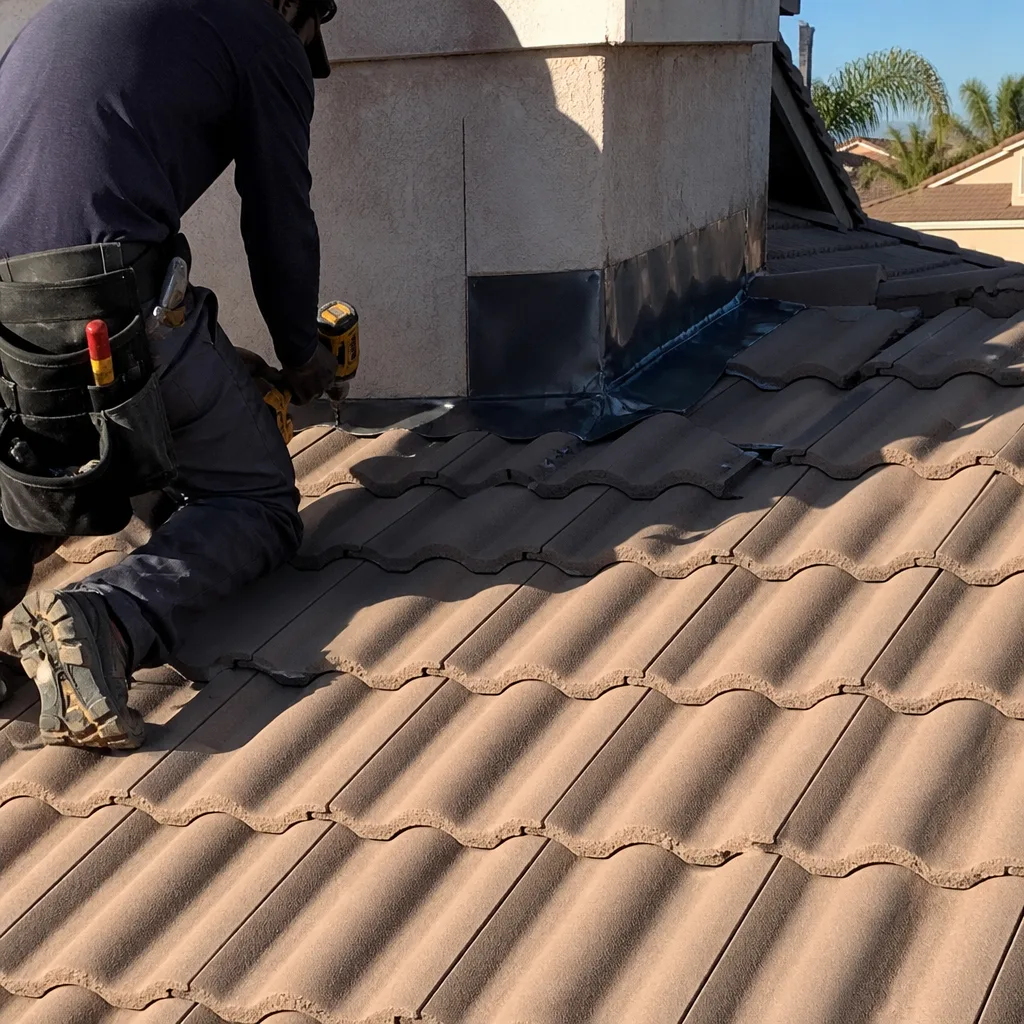
Flashing is the metal or membrane material that seals roof transitions: valleys, chimneys, skylights, walls, vent pipes. It’s the least glamorous part of a roofing bid and the most common place leaks develop over time. On a typical Orange home, flashing and related detail work accounts for $800 to $2,200 of the total project, and that number swings wildly based on roof complexity. A simple ranch with one chimney and no valleys has a low flashing cost. A two-story home with three valleys, two skylights, and a wall intersection has a high one. But here’s the issue: flashing cost is almost never itemized as a separate number. It gets folded into a “detail work” or “miscellaneous metal” line that’s easy to underbid.
We look for flashing line items that specify quantity and material: how many linear feet of valley metal, how many pipe collars, what type of chimney flashing. A bid that says “flashing as needed” with a single number is a bid you can’t verify. Step flashing at wall intersections should be specified by the linear foot. Pipe collars should be counted. Valley metal should be specified by type: woven, open, or closed valley, with the material called out. Orange homes built in the 1970s and earlier often have original galvanized flashing that has corroded in the coastal air and needs full replacement. Newer homes may only need selective replacement. The only way to know is to count the details, and the only way to compare bids fairly is to insist the details are counted on paper.
Ridge ventilation is another line item that separates serious bids from thin ones. An 1,800-square-foot home needs continuous ridge venting to meet current building code, and that runs $350 to $600 installed. Some low bids skip proper ventilation, or replace the ridge cap without addressing airflow, and the result is a hotter attic, shorter shingle life, and higher cooling bills in Orange’s summer. Ask whether the bid includes ridge ventilation and what type. It’s a small line item that has an outsized effect on roof life.
Labor Multipliers: Pitch, Stories, and Orange’s Hillside Reality
Roofing labor in Orange runs $110 to $175 per square for a standard single-story home with a walkable pitch. That number is not fixed. Every increase in pitch or story count multiplies it, and Orange’s mix of flat central neighborhoods and steep hillside lots means two homes a mile apart can have completely different labor math. A walkable 4:12 pitch roof on a single-story ranch is the baseline. A 7:12 pitch adds about 15% to 20% to labor cost because crews work slower, need roof jacks and fall protection, and handle materials differently. A 9:12 or steeper pitch, common on hillside homes in the eastern Orange hills, adds 30% to 50%.
Story count works the same way. A two-story home adds staging, ladder safety, and material handling time. Crews on a two-story roof in Orange might spend an extra half day just moving shingles up the ladder or setting up a conveyor. That pushes labor toward the $150 to $175 per square end or beyond for steep two-story homes. If your home is on a hillside with a two-story rear elevation, you’re paying the high end of every multiplier at once, and that’s before valley complexity adds another layer. A roof with four valleys demands more cutting, more flashing, more time, and more skill than a simple hip roof with no valleys.
Here’s the practical read: when you compare two bids that are $4,000 apart, look first at the roof geometry information each one uses. Did both contractors walk the roof and measure the pitch, count the valleys, and note the story count accurately? Did one measure by satellite and one by hand? A bid based on a satellite measurement is fine for a simple roof but frequently undercounts complexity on irregular Orange lots, and that undercount shows up as a cheap bid that becomes an expensive change order mid-job. When we look at a roof, the first thing we do is walk it, measure it, and document the complexity, because that’s the only way to give a number that holds.
Hidden Cost Categories Homeowners Don’t Budget For
Beyond the components we’ve covered, there’s a set of cost categories that routinely appear on Orange roofing invoices and surprise homeowners who have never been through a replacement. The good news is that every one of these is predictable if you know to ask. Here are the line items that show up on final bills and the typical 2026 ranges in Orange:
- Permit fees: $350 to $700 depending on the city’s fee schedule and project valuation. Orange requires permits for full roof replacements, and some repair work that exceeds a certain scope also triggers them. Permits are not optional if you want the job done legally, but they’re sometimes left off initial bids to make the number look lower.
- Dumpster and disposal: $400 to $700, higher if street placement requires a permit or if the home has limited side access. This is sometimes bundled into tear-off, sometimes listed separately.
- Decking replacement overage: $75 to $115 per sheet, as discussed above. Budget for at least a few sheets on an older home.
- Roof access equipment rental: $200 to $500 if a conveyor, lift, or roof jack rental is needed for steep or two-story homes.
- Minor framing or fascia repair: $150 to $600 when the crew finds rotted fascia boards or a soft rafter tail during tear-off, common on Orange homes with original wood trim.
- Satellite dish and solar panel removal: $100 to $300 per item to detach and reset, or more if a solar array requires a separate solar contractor to remove and reinstall panels.
The pattern across all these categories is the same: they’re not in the initial bid because they can’t be confirmed until the old roof is off. That’s legitimate. What’s not legitimate is failing to disclose the per-unit rates up front. A bid that lists “decking replacement: $95 per sheet as needed” is honest. A bid that doesn’t mention decking at all is setting you up for a surprise invoice. Ask for a written overage schedule before you sign anything, covering decking, fascia, and any other conditional line items. If a contractor refuses to provide one, that’s your signal to keep looking.
Warranties: What You’re Actually Paying For vs. What’s Called a Warranty
Roofing warranties come in three layers, and confused layering is how low-bid contractors make weak coverage sound like strong coverage. The first layer is the manufacturer’s material warranty, which covers defects in the shingles themselves. This is included in the shingle price and has nothing to do with the contractor. The second layer is the contractor’s workmanship warranty, which covers installation errors. This is the one you should care most about, because installation errors cause more premature roof failures than defective shingles ever do. The third layer is the enhanced manufacturer warranty, which combines material and workmanship coverage but requires the contractor to be certified by the manufacturer and to follow specific installation standards. That certification is a real cost to the contractor, and it’s partially passed through to you.
In practice, a basic material warranty costs you nothing extra but covers little beyond manufacturing defects. A legitimate contractor workmanship warranty, typically 5 to 10 years, should be included in a professional installation at no additional line-item cost. The enhanced manufacturer warranties, like the systems offered by Owens Corning and IKO through certified contractors, run $100 to $250 per square and require the full system, including underlayment, to come from one manufacturer. That’s a real choice point. If you want the longest, most seamless coverage, the enhanced warranty is worth evaluating. If you want to mix brands to optimize cost, you’re trading away that particular warranty. Either way, ask what the workmanship warranty covers, how long it lasts, and whether it survives the sale of the home. A warranty that dies when you sell is less valuable in a market like Orange, where homes turn over regularly.
One more note: some low bids call a 1-year “we’ll come back if anything leaks” promise a warranty. It isn’t. A one-year callback promise is essentially a customer service policy. When you’re comparing bids, get the workmanship warranty terms in writing, in years, with the scope spelled out, and don’t let verbal promises stand in for written coverage. For a deeper look at how repair scoping works versus replacement scoping, see our full guide to Roof Repair in Pico Rivera.
Common Mistakes to Avoid
These are the patterns we see repeatedly in Orange roofing projects, from bid comparison through final walkthrough. Each one costs money, time, or roof life.
- Comparing bids without a shared scope of work. You can’t compare a $14,000 bid that includes decking contingencies, synthetic underlayment, and continuous ridge venting against an $11,000 bid that includes none of those. The $11,000 bid isn’t cheaper; it’s incomplete. Ask each contractor to line-item the scope, then compare.
- Choosing shingles by brand instead of tier. Within any major brand, there’s a wide price range between entry architectural and premium lines. Two bids using the same brand can be thousands apart on the shingle line alone. Get the specific product line and warranty class in writing.
- Ignoring ventilation. A new roof on a poorly ventilated attic in Orange will age twice as fast. If your bid doesn’t address airflow, ask why. Continuous ridge venting costs a few hundred dollars and can add years of shingle life.
- Assuming the cheap per-square price covers the complex parts. Valleys, chimneys, and wall intersections are labor-intensive and flashing-heavy. A low per-square number often means the detail work was underpriced or left vague. Complexity is where installation quality is won or lost.
- Skipping the attic during pre-replacement inspection. What’s visible from the roof tells you about shingle condition. What’s visible from the attic tells you about decking condition, leak history, and ventilation. Walk the attic before you sign.
- Accepting a verbal overage schedule. “Decking replacement will be about $90 a sheet” means nothing if it isn’t in the contract. Get every conditional rate in writing before the tear-off starts.
- Forgetting to ask about permit status. A roofer working without a permit in Orange saves you a fee today and risks a citation, a stop-work order, and a resale problem later. Confirm the permit is pulled in your name before work starts.
When to Call a Professional
Some roof decisions are worth making on your own, and some aren’t. If you see curled or missing shingles, granules in your gutters, a leak stain on a ceiling during Orange’s wet season, or you’re preparing a home for sale and need a condition assessment, a professional roof inspection is the right starting point. That inspection gives you a documented, objective picture of your roof’s condition, and it doesn’t commit you to anything. On the repair-versus-replace question, the honest answer depends on roof age, decking condition, and leak history, and that data only comes from a real assessment. If you’re within a few years of your roof’s expected lifespan, or if a storm has hit, don’t guess. Windmill Roof Repair offers free estimates in Orange – call (866) 850-2496, and we’ll walk the roof with you and tell you what we see.
Frequently Asked Questions
A full roof replacement in Orange runs $9,800 to $22,000 for a standard 1,800-square-foot single-story home, with tear-off, materials, and labor accounting for most of the total. The wide range reflects differences in pitch, story count, material tier, decking condition, and detail complexity. Call (866) 850-2496 for a free estimate that breaks the number down line by line.
Labor is typically the largest single cost category, running $110 to $175 per square on a standard Orange roof and 30% to 50% more on steep or two-story homes. Tear-off and disposal are the second largest. Shingles themselves are usually the third-largest line item, which surprises homeowners who assume material dominates the bid.
The difference is almost never the shingles. It’s in underlayment tier, flashing scope, ventilation inclusion, decking overage schedules, and labor complexity assumptions. A bid that specifies each of these will naturally run higher than a bid that doesn’t, and the higher number is usually the more honest one. Ask both contractors to itemize the same scope and the comparison gets meaningful.
Yes, the City of Orange requires a building permit for full roof replacements, and the permit fee typically runs $350 to $700. Some repair work also triggers permit requirements depending on scope. Make sure your roofer pulls the permit in your name before work starts; an unpermitted roof becomes a resale complication later.
Orange’s housing stock spans the full range: mid-century ranch homes with low-pitch hip roofs in central neighborhoods, two-story tract homes from the 1980s and 1990s, and hillside custom homes on the east side with steeper pitches and multiple valleys. Each roof type carries different labor multipliers and flashing requirements, which is why component-level estimates matter more than per-square averages.
A standard single-story roof with good access takes 1 to 3 working days from tear-off through final inspection. Steeper roofs, two-story homes, and roofs with heavy decking replacement or multiple valleys add time, and Orange’s occasional winter rain can also pause work between tear-off and dry-in. Your estimate should spell out the expected schedule, and weather contingency should be discussed before work starts.
Yes, most Orange homeowners stay in place during a replacement. The work is loud and disruptive for a few days, and you’ll want to protect items in the attic from dust and debris vibration, but there’s no need to vacate. If anyone in the household has serious respiratory issues, consider staying elsewhere during the tear-off days, because that phase generates the most dust.
Yes, we offer free in-person estimates throughout Orange, and every estimate includes a written, component-level breakdown so you can see exactly where the money goes. We work with seven major shingle brands, including Owens Corning, IKO, Atlas, and Tamko, and we’ll recommend the right material for your roof, not the one that’s easiest for us. Call (866) 850-2496 to schedule yours.
The Bottom Line
A roofing bid in Orange is only as useful as the detail behind it. The total number tells you nothing until you can see the tear-off cost, the decking overage schedule, the underlayment tier, the shingle tier and brand, the flashing count, the ventilation plan, and the labor multipliers for your specific roof geometry. Once you can read those line items, comparing bids becomes straightforward, and the mystery pricing that lets contractors lowball and overcharge disappears. Get the scope in writing, ask for the details, and don’t sign until the math makes sense. That’s how you get a roof that’s built right, priced fairly, and built to handle what Orange weather brings. For a broader look at our full range of services, visit the Windmill Roof Repair home page or see our guide to Roof Replacement in Pico Rivera.
Written by the team at Windmill Roof Repair, serving Orange since 2018.
See the difference
 Before
 After
 Before
 After
 Before
 After