
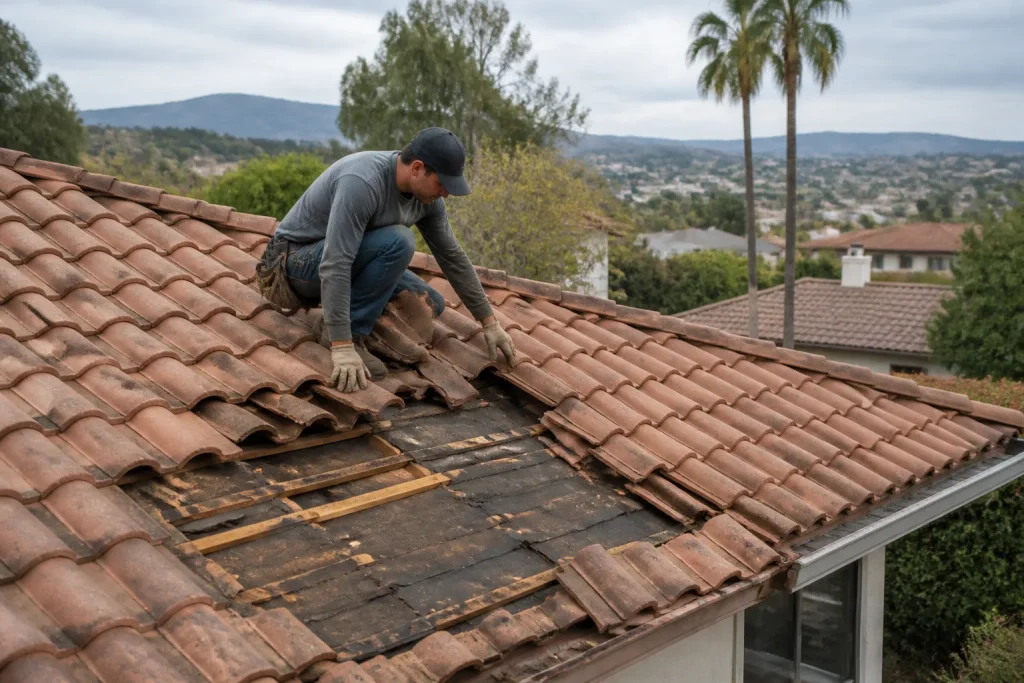
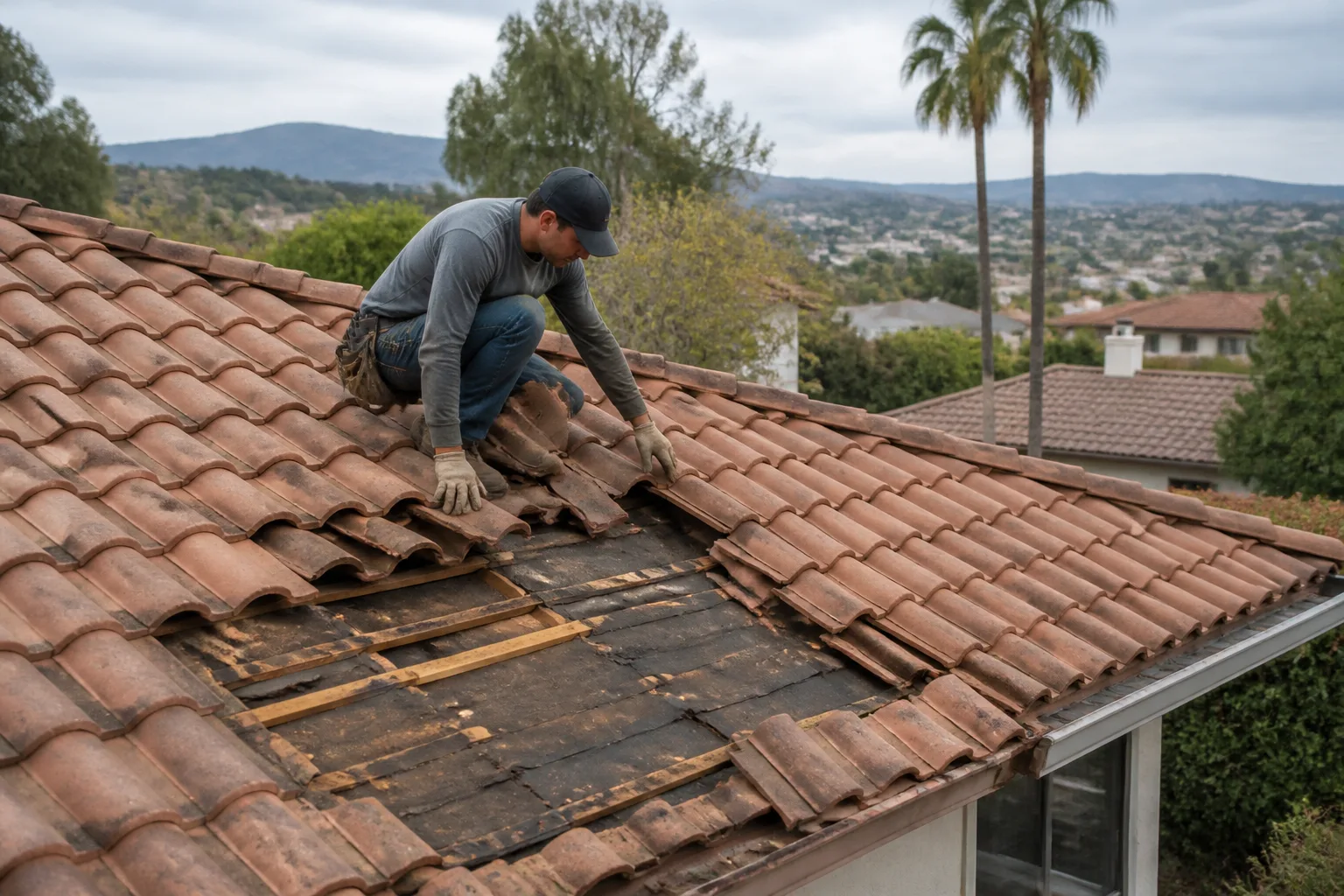
Emergency Roof Repair Near Me: What Orange Homeowners Should Do First
If you have water coming through your ceiling in Orange, the first thing to do is protect the interior, document the damage, and arrange a temporary tarp. The phone call to a contractor comes after those steps. The first hour is when claims are won or denied, and the actions you take before anyone arrives matter more than which roofer shows up. If you’d rather skip the details, call Windmill Roof Repair at (866) 850-2496 and we’ll walk you through it.
Why the First 60 Minutes Decide Your Insurance Claim
Insurance adjusters have a term for it: failure to mitigate. If you didn’t take reasonable steps to stop additional water intrusion after a storm, your carrier can reduce or deny the interior damage portion of your claim, even with a valid policy. In Orange, where we get intense winter rain bursts followed by dry spells, homeowners sometimes wait a day or two, thinking the worst has passed. That delay can be expensive.
Your policy requires you to act like a reasonable person would: protect your property from further loss. That means moving furniture, catching water in buckets, and getting a tarp over the breach as soon as it’s safe. None of that requires a contractor. All of it protects your claim.
- Move electronics, rugs, and anything water-sensitive out of the affected room.
- Place buckets or heavy-duty trash cans under active drips.
- Relieve pressure in ceiling drywall if it’s bulging by poking a small drain hole with a screwdriver. Use a bucket underneath.
- Photograph the bulge and the water stain before touching anything.
The First-Hour Checklist: What Orange Homeowners Should Do in Order
We’ve answered hundreds of emergency calls around Orange, from the tree-lined streets near Old Towne to the newer subdivisions in the eastern hills. The homeowners who fare best follow the same sequence. Here it is.
- Protect the interior first. Move belongings, catch water, drain ceiling bulges. This takes 10 minutes and prevents thousands in water damage.
- Document before you disturb. Photograph the water stain, the drip, the ceiling condition, and any visible roof damage from ground level before moving anything or climbing anywhere. Wide shots for context, then close-ups.
- Get a tarp over the breach. This is the most important mitigation step. In Orange, we regularly see wind-driven rain during late fall and early spring. A fastened tarp prevents repeated intrusion every time another cell passes through.
- Call your insurance company. Not first. After you’ve protected the property and started documenting. What you say on that first call shapes the claim.
- Contact a roofing contractor. Request an emergency tarp and a documented roof assessment. Ask the three questions we cover below.
Temporary Repairs You Can Do Safely From Ground Level
Anchoring a tarp is the single most effective temporary fix. A properly secured tarp keeps water out for days or weeks while you sort out a permanent repair. But there is a right way, and insurers notice the difference.
- Buy a heavy-duty tarp, not the cheapest one. Anything under 10 mil thickness tears in wind. Orange gets Santa Ana gusts that will shred a thin tarp overnight.
- Position the tarp so it extends past the ridge line by at least three feet. Water runs over, not under.
- Secure it with quarter-inch rope or bungee cords anchored to ground stakes or fascia boards, never nails through the roof deck. Holes you make become new leaks and new exclusions.
- Weigh down the center with sandbags if you have them. A flapping tarp is a torn tarp.
Things you should never do from the ground: climb onto a wet roof, attempt to seal shingles with spray, or pull at a curled shingle to inspect the damage. Falls from wet roofing are among the most preventable injuries we see in this trade. Even a single-story ranch in Orange has a high enough pitch to break a leg or worse.
When to call a pro: Any time the repair requires standing on the roof, working near power lines, or dealing with a steep pitch. We pull tarps, ropes, and anchor tools out for Orange homeowners all winter, and we do it from staging and tied-off anchors. No roof is worth a spinal injury.
How to Document Storm Damage Like an Adjuster Would
Adjusters work from evidence, not emotion. What you show them in the first hour determines what they approve in the claim. In Orange, where hail events are rare but wind and rain damage are common, documentation is the difference between a covered repair and a denied one.
- Start with the interior: photograph every water stain from two angles, one wide and one close. Include a ruler or dollar bill for scale.
- Move to the exterior: from the ground, photograph the roof face where the leak is located. Then walk the perimeter and photograph all four roof planes.
- Capture the weather: screenshot the storm radar or local weather report showing the event date and severity. This places the damage in time and cause.
- Record materials: note the shingle type or approximate age if you know it. Matching matters for insurance repair, and this is where working with a roofer who handles multiple brands helps. If your roof is Boral tile or an older architectural shingle from CertainTeed, the adjuster will want to know what they’re matching.
- Keep receipts: the tarp, the rope, the buckets. All of it is reimbursable under most policies as reasonable mitigation expense.
We’ve walked through this process with homeowners across Orange. The ones with 60 photographs and a timeline get approved faster than the ones with three blurry shots. Take more than you think you need.
What to Say When You Call Your Insurance Company
The first call sets the tone for the claim. Say too little, and the adjuster has nothing to work from. Say the wrong thing, and you can accidentally exclude coverage.
- Say: “We had a storm on [date]. Water entered the home through the roof. We’ve protected the interior, documented the damage, and are arranging a temporary tarp.”
- Don’t say: “I’m not sure when it started” or “This roof has been leaking for a while.” Long-term or gradual water intrusion is typically excluded from storm coverage, and claims that sound like deferred maintenance get denied.
- Ask: “What is our mitigation requirement, and does our policy reimburse temporary tarping?”
- Request: a claim number and an adjuster assignment date. Then follow up in writing with your photos.
Never say the word “flood” if you mean rain through the roof. Flood damage requires separate coverage, and using the wrong term on a recorded line can derail a legitimate claim. Use “storm damage” or “water intrusion from a roof breach.” Be precise.
Three Questions That Separate Real Roofers From Storm Chasers
After a major weather event in Orange, out-of-area crews show up. Some are legitimate. Others are storm chasers who lease a few trucks, knock on doors, and disappear when the checks clear. Here is how to sort them in two minutes.
- “Are you performing the work with your own crew, or subbing it out?” A real roofer answers instantly. If they hesitate, walk away. Subcontractor churn is the number one source of warranty disputes and shoddy workmanship we get called in to correct.
- “Which shingle brands do you install for insurance repair?” If they can only name one, that’s a red flag. Insurance repairs often require matching an existing product. A roofer who works across multiple manufacturers can source the match. A one-brand shop will try to convince you their brand is the norm, even when your roof is something else. We keep seven brands in rotation, including GAF, CertainTeed, Atlas, IKO, Tamko, Boral, and Owens Corning, because matching is a real part of insurance work in Orange.
- “Will you put the tarp scope and the repair scope in writing before any work is authorized?” If you get anything other than a yes, end the conversation. An honest roofer will give you a written line-item quote tied to the insurance claim before touching anything.
Related services in Orange: For a documented Roof Inspection in Pico Rivera, a targeted Roof Repair in Pico Rivera, or a full Roof Replacement in Pico Rivera, we offer free estimates and the same multi-brand approach for every scope.
What Happens After the Tarp Is Up
The tarp is mitigation, not a repair. Your next step is a documented roof assessment that gets everyone on the same page: you, your adjuster, and the contractor. In Orange, we do standalone roof inspections as a no-commitment first step. You get a written condition report, photos, and a clear recommendation on whether a targeted repair is enough or if replacement is the right call.
We’ve seen homeowners in the Floral Park and Orange Hills neighborhoods go through full replacements that insurance denied and, more often, simple targeted repairs that insurance covered in full. The difference is almost always documentation and scope discipline. Repair when you can, replace when you must. That’s the standard we hold ourselves to, and it’s the standard you should hold any roofer to.
What we won’t do is pressure you into a full replacement because it’s a bigger check. The right material for your roof, not ours. That philosophy applies to the scope of work too.
The Bottom Line
In a roofing emergency, the first hour determines the outcome. Protect the interior, document everything, tarp the breach, call your insurer, then call a roofer. Do those steps in that order and your claim has a fighting chance. Skip the documentation and you’ve given the carrier a reason to reduce or deny.
If you’re in Orange and need help with emergency roof repair, Windmill Roof Repair home is one call away. We offer free estimates and honest scope recommendations. Call (866) 850-2496 and we’ll help you get a tarp up and a claim filed the right way.
Frequently Asked Questions
Emergency roof repair in Orange typically includes two costs: temporary tarping, which generally runs $300 to $600 depending on roof size and access, and the permanent repair itself. The permanent repair scope varies widely, from a $400 shingle replacement to a $1,500 flashing rebuild. Your insurance policy may reimburse both under storm damage coverage. Call (866) 850-2496 for a free estimate and we’ll put the exact numbers in writing.
No. Waiting is how “failure to mitigate” denials happen. Orange rain events often come in repeated waves, and a small roof breach that goes untarped leaks again with every pass. Interior water damage compounds fast: drywall sags, insulation mats, and mold begins in as little as 48 hours. Act in the first hour and you protect both your home and your claim.
Storm damage to the roof itself is typically covered if the event was sudden and the roof was in reasonable condition before it happened. Gradual wear, deferred maintenance, or long-standing leaks are usually excluded. Coverage also depends on your specific policy and deductible. The best move is to document everything, notify your insurer immediately, and arrange a professional inspection that provides the evidence your adjuster needs.
For insurance repairs, yes. Your adjuster will match the existing roof material, and if your roofer only installs one brand, you’ll either get a mismatched patch or get pushed into a full replacement you didn’t need. In Orange, we work across seven leading brands including GAF, Atlas, and Tamko, which means we can match most existing materials without forcing a scope change. Call (866) 850-2496 for a free estimate and we’ll tell you what’s actually on the roof before we recommend anything.
Written by the team at Windmill Roof Repair, serving Orange since 2018.
Need Roofing Help?
Call Windmill Roof Repair — licensed & insured, here with fast after-hours help in Pico Rivera.
(866) 850-2496